
Key takeaways from TalentLab Futur:
On Thursday 13 November, the very first edition of TalentLab Futur took place in Paris, an event conceived by Laurent Brouat and run by Les talents narratifs. A whole day devoted to a seemingly simple question: how is AI reshuffling the cards in recruitment, work and skills?
Throughout the day, speakers from recruitment, tech, data and other fields shared their experiences, their doubts and their convictions.
A look back at this first edition:
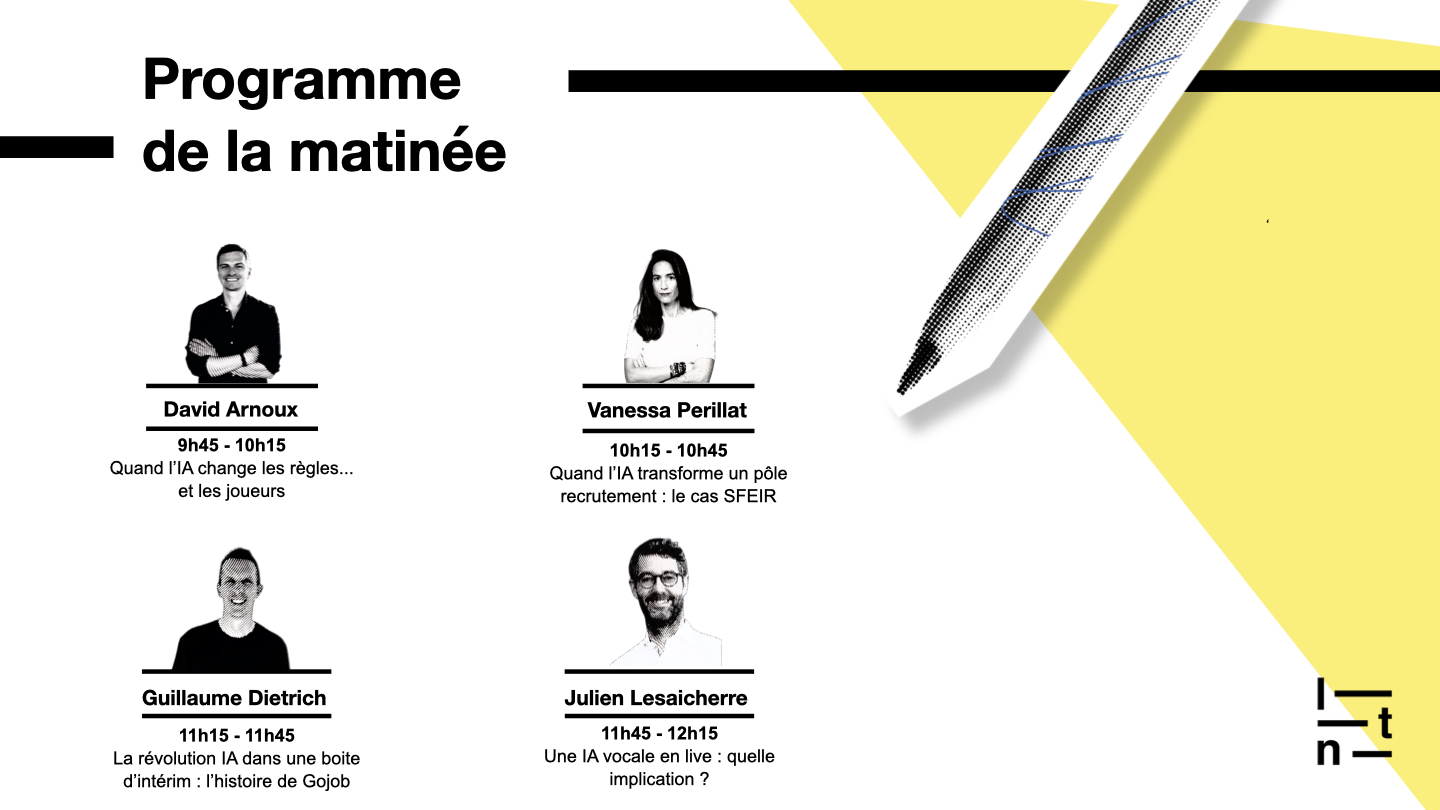
The morning programme: when AI transforms recruitment practices
When AI changes the rules... and the players
- Talk by David Arnoux (Founder of Growth Tribe and GenAI)
The day opened with a talk by David Arnoux, founder of Growth Tribe and now at the head of several AI projects (including Humanoids).
His opening message can be summed up in one sentence: AI does not eliminate human creativity, it amplifies it.
For years, David supported marketing, sales and product teams through their digital and AI transformation. He now runs "augmented companies" where a small human team orchestrates an army of AI agents: content generation, marketing campaigns, customer service, data analysis...
Humans are not disappearing, they are changing position: less manual execution, more of an editor-in-chief role, as strategist and arbiter of "good taste".
To illustrate this shift, he looks back at the invention of the Jacquard loom. An innovation that sparked revolts but which, in the long run, moved the weaver's trade towards higher-value roles: textile design, quality control, fashion design...
According to him, we are today's "modern weavers":
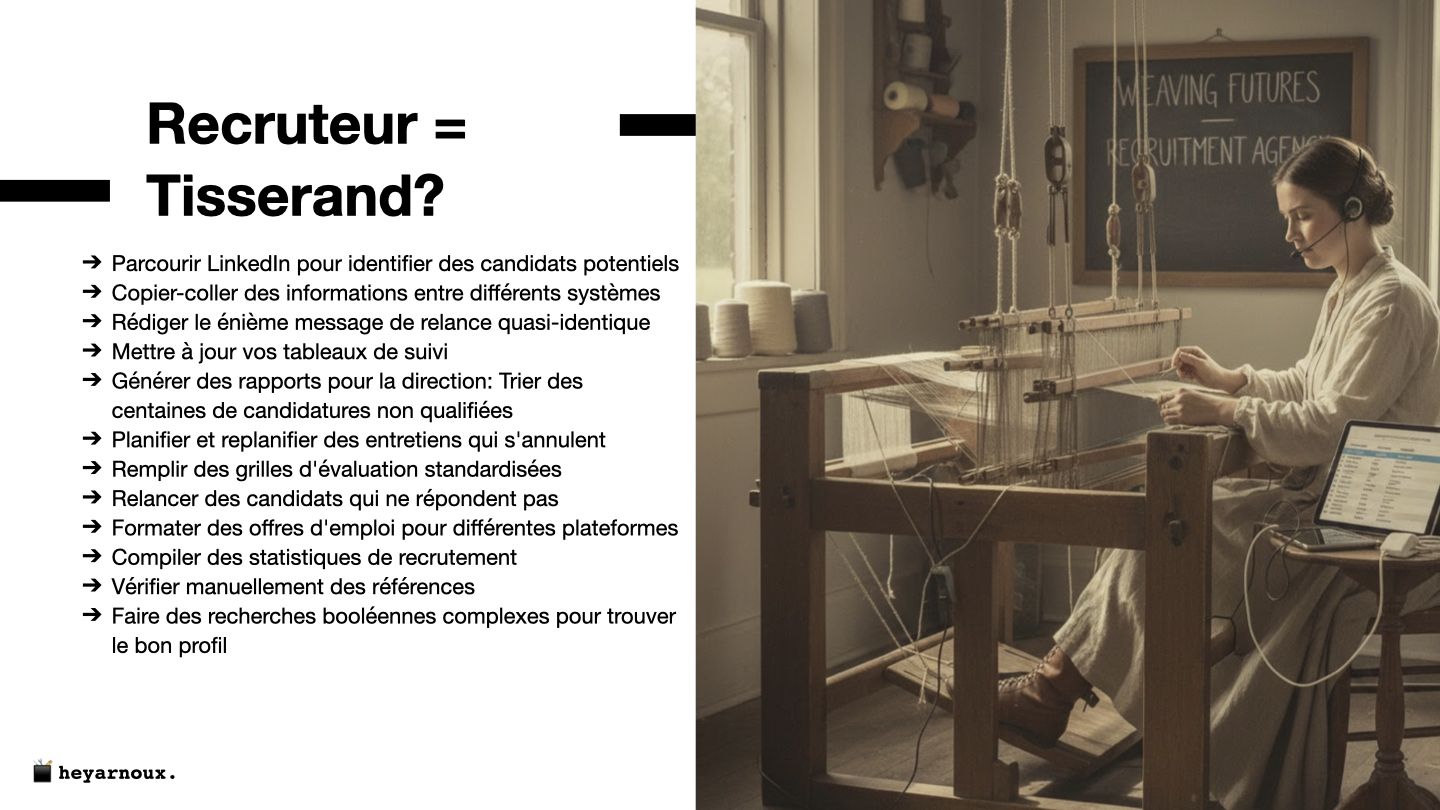
We still spend far too much time copying and pasting, updating spreadsheets, reformatting job ads, chasing candidates... all tasks that AI can already absorb very well.
David also stresses an often-forgotten point: it is not AI that cuts jobs, it is management decisions. He contrasts two visions:
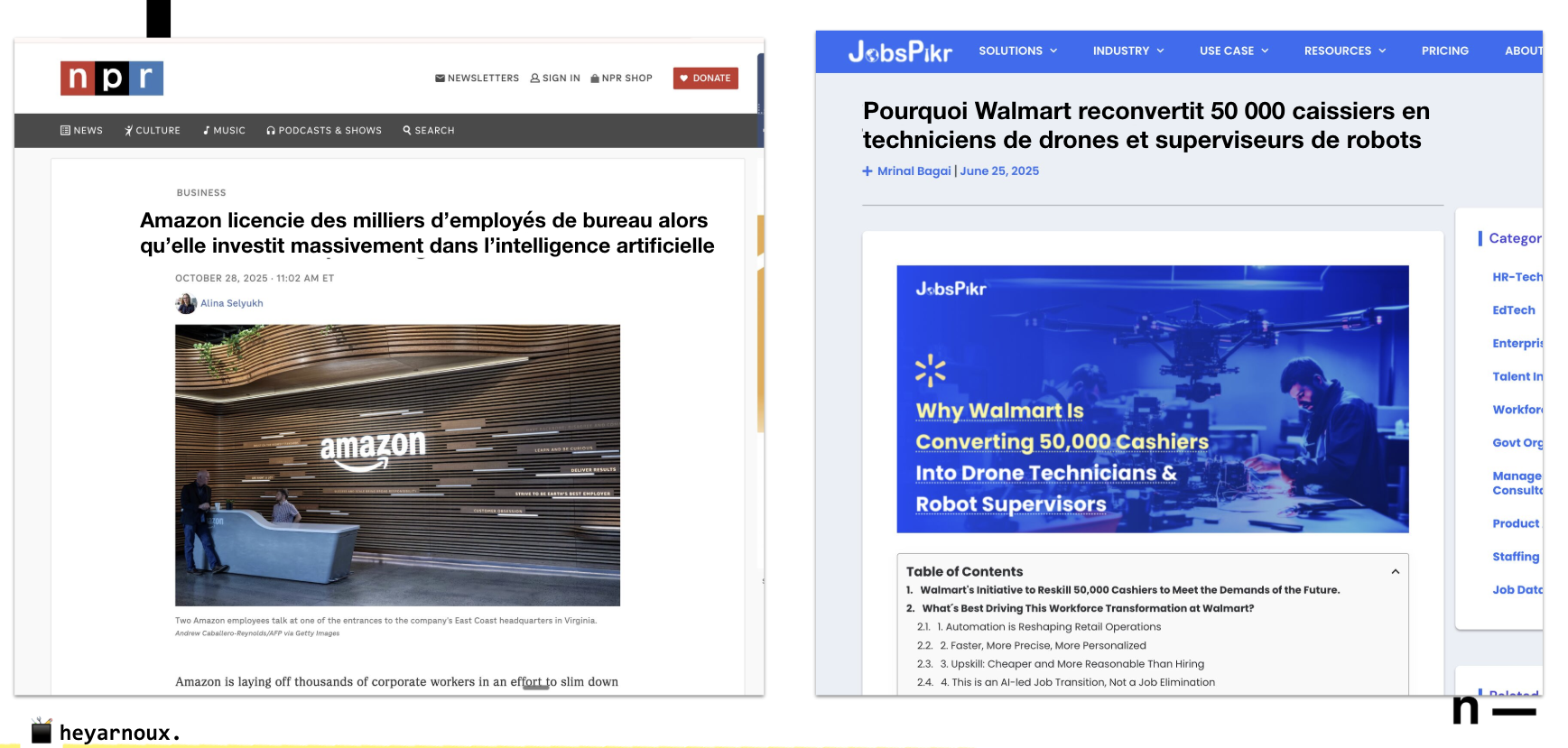
- That ofAmazon, which is using AI to cut its workforce massively,
- That of Walmart, which is choosing to retrain tens of thousands of employees to build augmented teams.
For HR professionals too, it is all a question of mindset:
- A fixed mindset, such as: "it's just hype", "it's going to take our jobs", "we can't use it because of the GDPR"...
- A growth mindset, such as: "how do I equip myself?", "which tasks do I start with?", "How do I keep people at the centre?"...
1. Audit your tasks: identify what is low value-added vs what is genuinely human
2. Prioritise use cases: with a simple impact / ease-of-implementation matrix.
3. Start small: one well-defined use case at a time, rather than trying to transform everything at once.
4. Stay in control: test it yourself first, then let AI speed things up (the "centaur" method : half human, half machine).
Ultimately, the teams that learn to "ride the wave" will be the ones creating the most value tomorrow. The others will carry on weaving by hand in a world of looms.
When AI transforms a recruitment team: the SFEIR case
- Talk by Vanessa Perrillat (VP Talent Acquisition, SFEIR)
At SFEIR, a digital services company specialising in highly scarce profiles (data, AI, cloud, application development), the question was not whether AI would change recruitment, but when. The answer was: "not in ten years, now". In six months, the Talent Acquisition teams went from 10% to 90% weekly usage of AI tools.
For Vanessa Périllat, AI does not just change the way we work, above all it changes our way of thinking. She offers a metaphor: whereas a conventional tool is like a saucepan (one specific function), AI is more like a chef at your side suggesting several possible recipes from the same ingredients. In recruitment, AI proposes strategies, wording and action plans, but it is always the recruiter who decides.
Her personal turning point came from a difficult hire: a vague brief, a role in short supply, little time available on the manager's side... By feeding the information she had into an AI tool, she obtained:
- The areas to challenge with the hiring manager,
- Ideas for a sourcing strategy,
- Examples of job ads and messages.
According to Vanessa, the real challenge wasgetting the whole team on board. She relies on the innovation adoption curve:
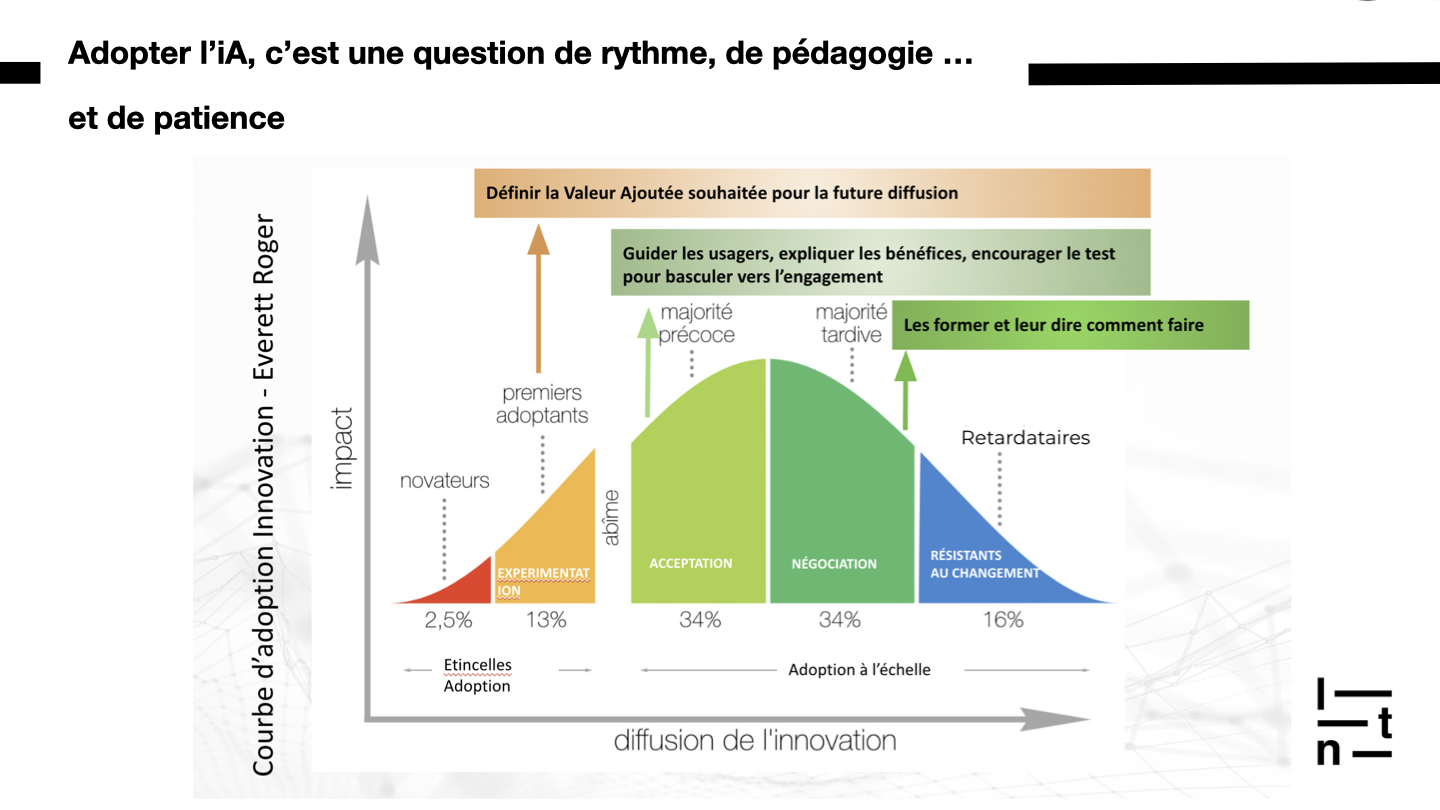
- Identify the "champions" and co-build a list of use cases with them,
- Support the early majority with concrete demonstrations, quick wins and ready-to-use assistants,
- Train and equip the late majority with libraries of assistants and step-by-step guides,
- Finally, accept that there will always be some "resisters" to change, and that they are not where all the energy should be focused.
Today, SFEIR's recruitment team uses AI for a large part of its work:
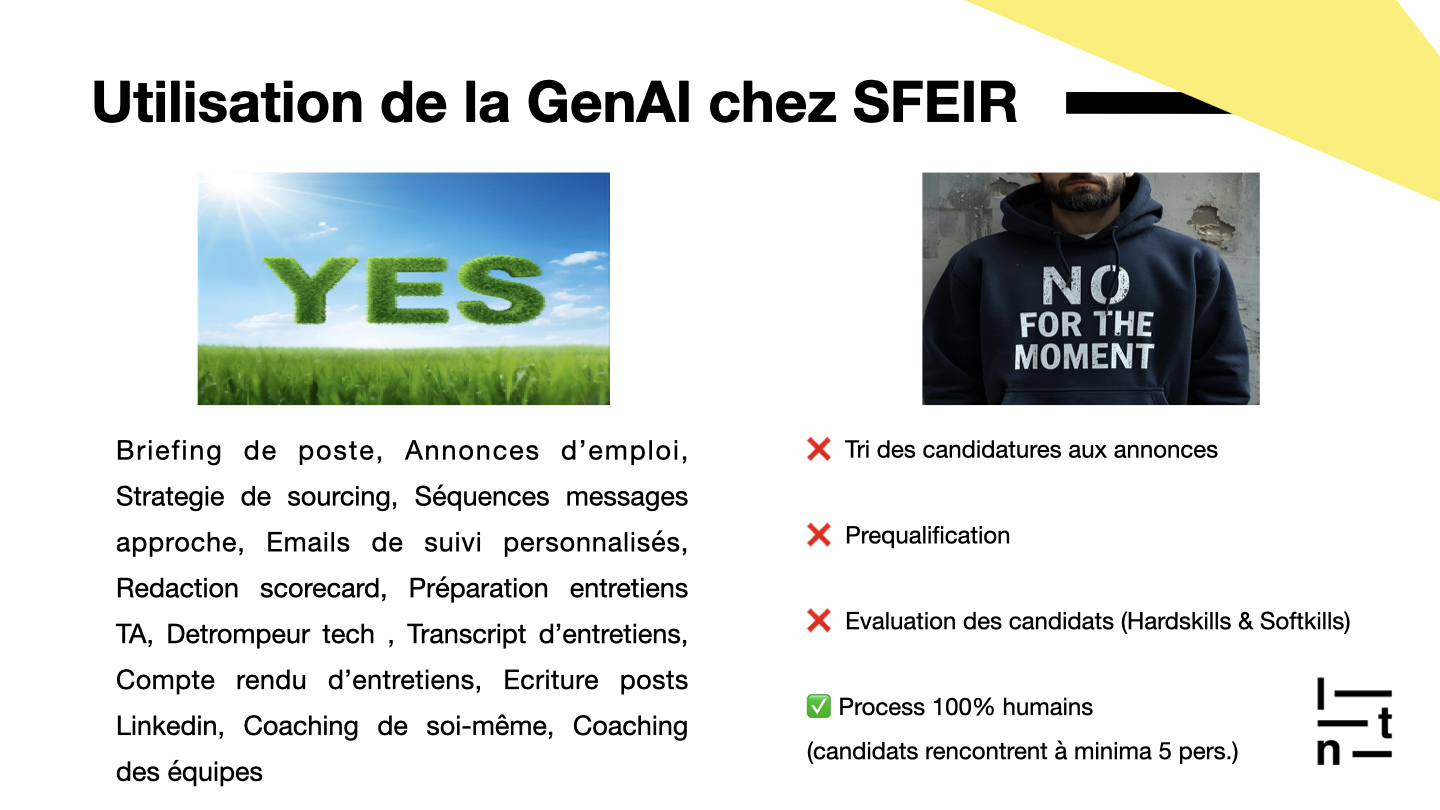
- Clarifying job briefs, writing job ads, sourcing strategies,
- Message sequences and personalised follow-ups,
- Preparing and structuring interviews, interview reports, LinkedIn posts,
- Self-coaching for recruiters and support for managers.
A strong point of their approach: AI also becomes a criterion for assessing candidates. The company no longer hires people who are completely resistant to AI and looks at the very least for an interest in and curiosity about these tools. Recruiters, for their part, increasingly position themselves as coaches for candidates and managers, and as strategists on future skills and the employer brand, designed with an AI-first mindset.
She sums up the transformation in a few tips:
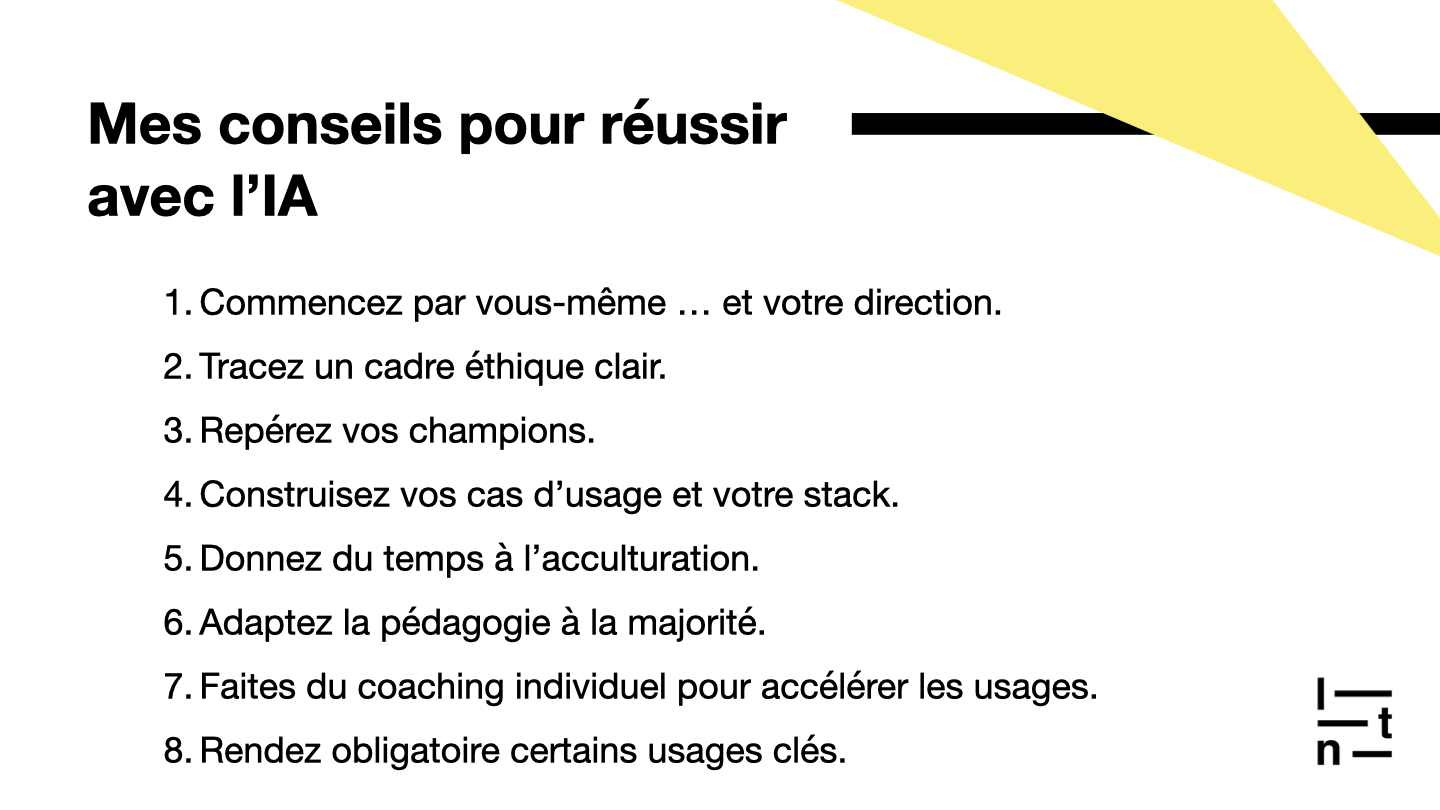
- Start with yourself and with senior management, who must use AI on a daily basis to see its potential,
- Set a clear ethical and GDPR framework before rolling it out across the board,
- Identify your champions, define the priority use cases and the tool stack,
- Combine acculturation, group training and individual coaching,
- Make certain key uses mandatory once they have been mastered (for example, systematically using transcription tools in interviews).
The AI revolution at a temporary staffing company: the GoJob story
- Talk by Guillaume Dietrich (GoJob)
At GoJob, AI has profoundly transformed the business. In three years, the company has:
- multiplied by 6 the volume of applications processed,
- multiplied by 15 the number of client needs addressed,
- increased by 10 recruiter productivity,
all without increasing headcount.
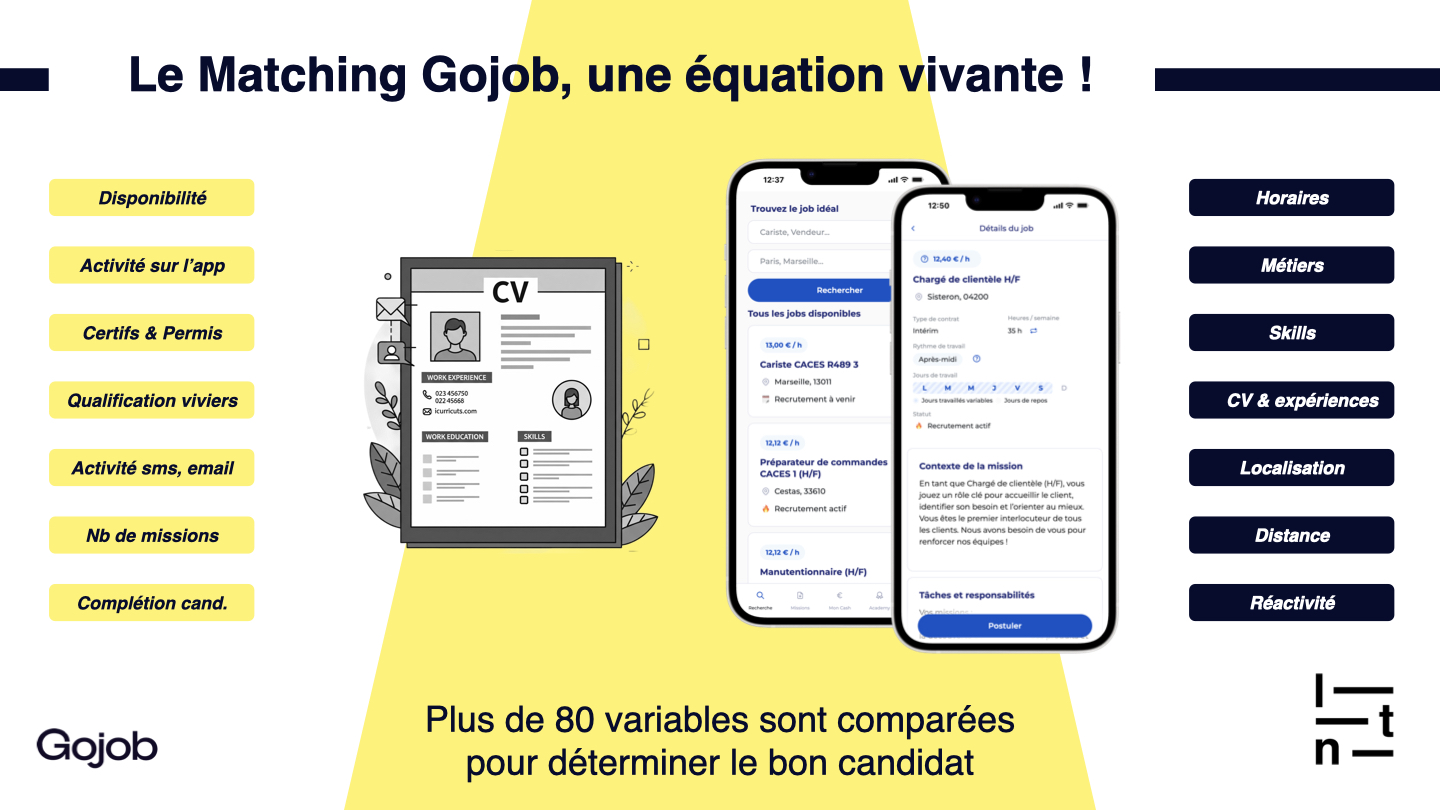
At the heart of this performance: a matching engine powered by more than 80 variables (CV, history, interactions, availability...) and an AI assistant, Alpha, able to identify the right candidates, interact with them, update their profile and arrange the introduction to the recruiter.
Contrary to initial fears, adoption among candidates is excellent: 83 % of them readily agree to interact with an AI, with even better response rates when this is announced upfront.
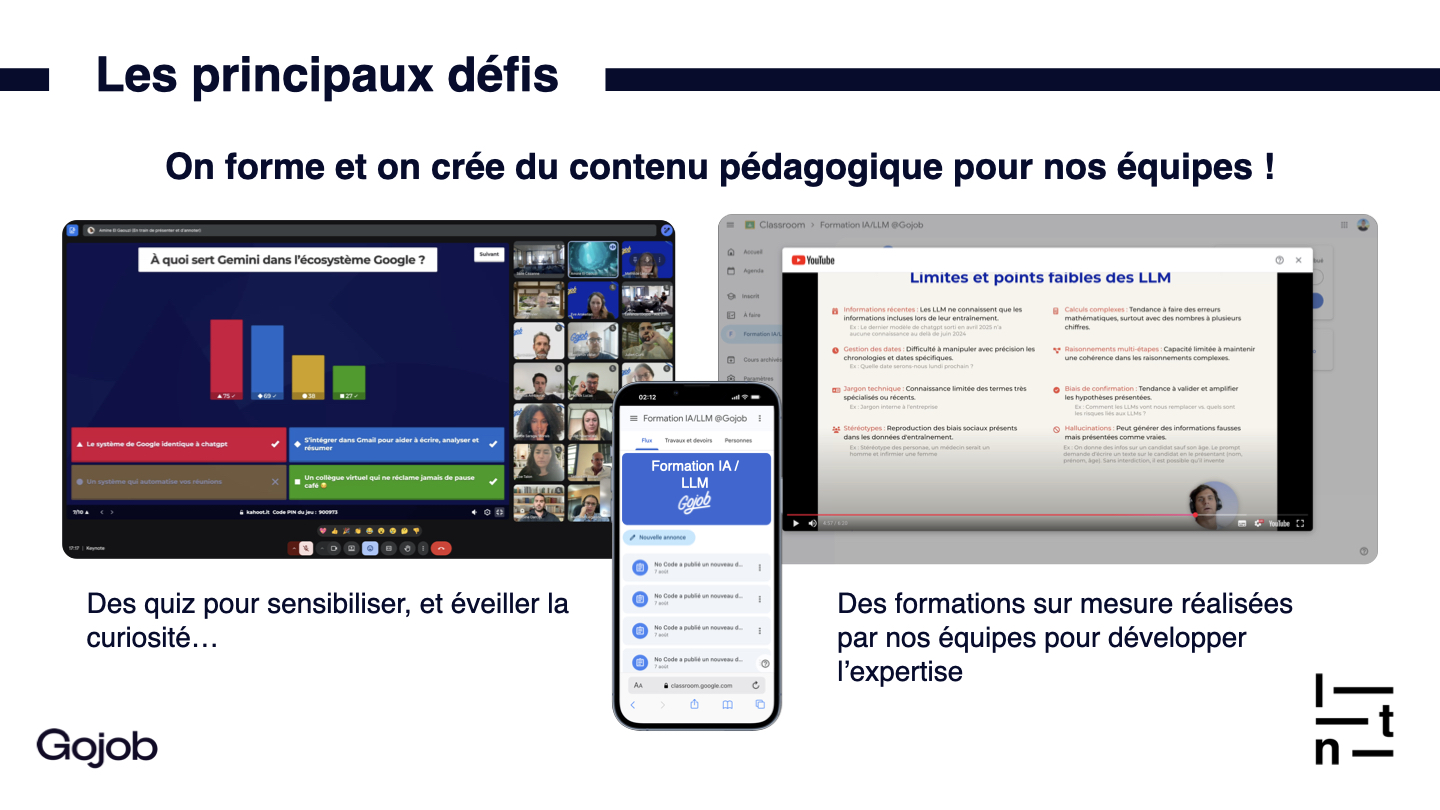
The reluctance came instead from within. GoJob responded with teaching, tailored training and a clear promise: AI is not meant to replace recruiters, but to augment their role.
The gains are used to spend more time in interviews: from an average of 23 minutes , recruiters have moved to 36 minutes per candidate.
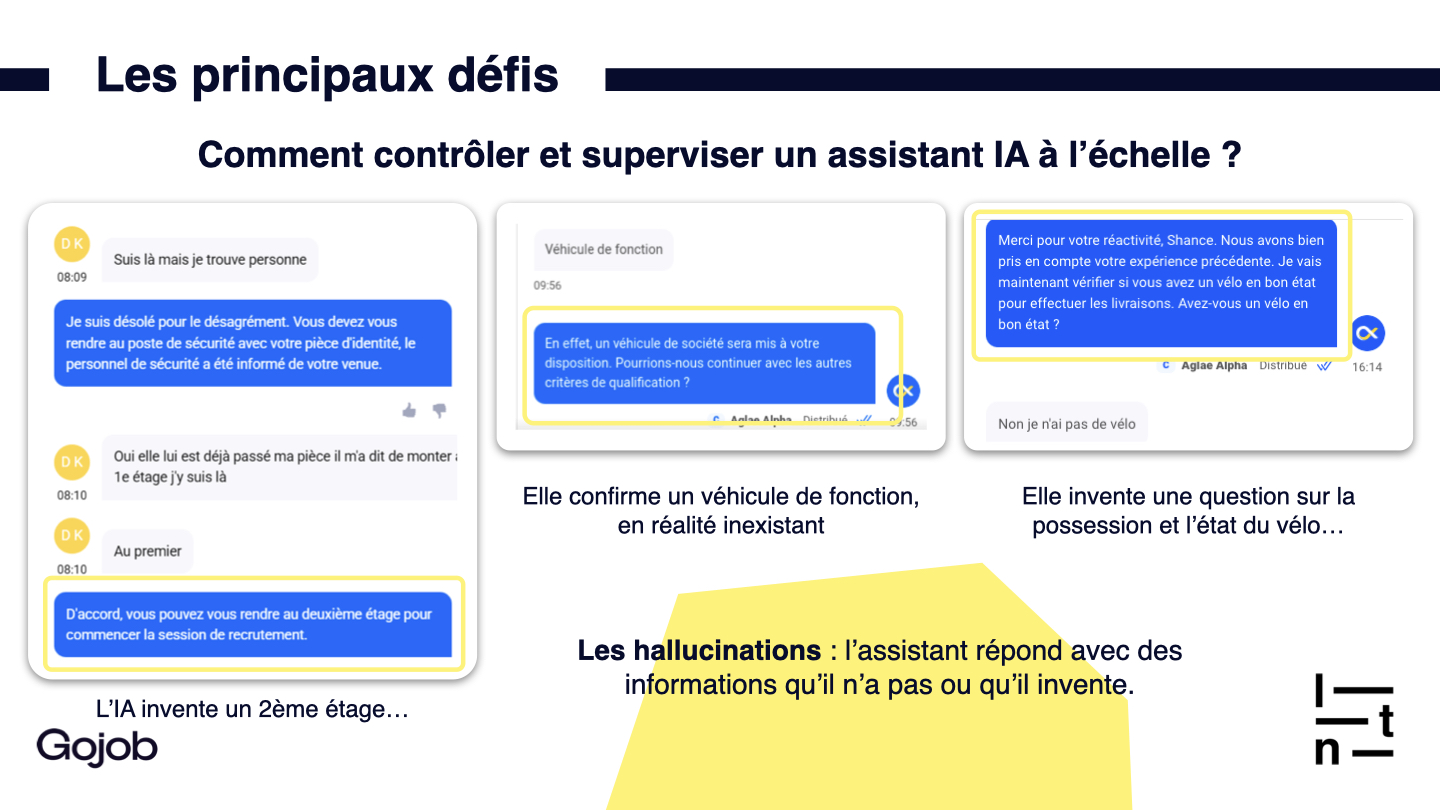
The main challenge: supervising the AI and handling possible hallucinations, an issue still poorly covered by dedicated tools.
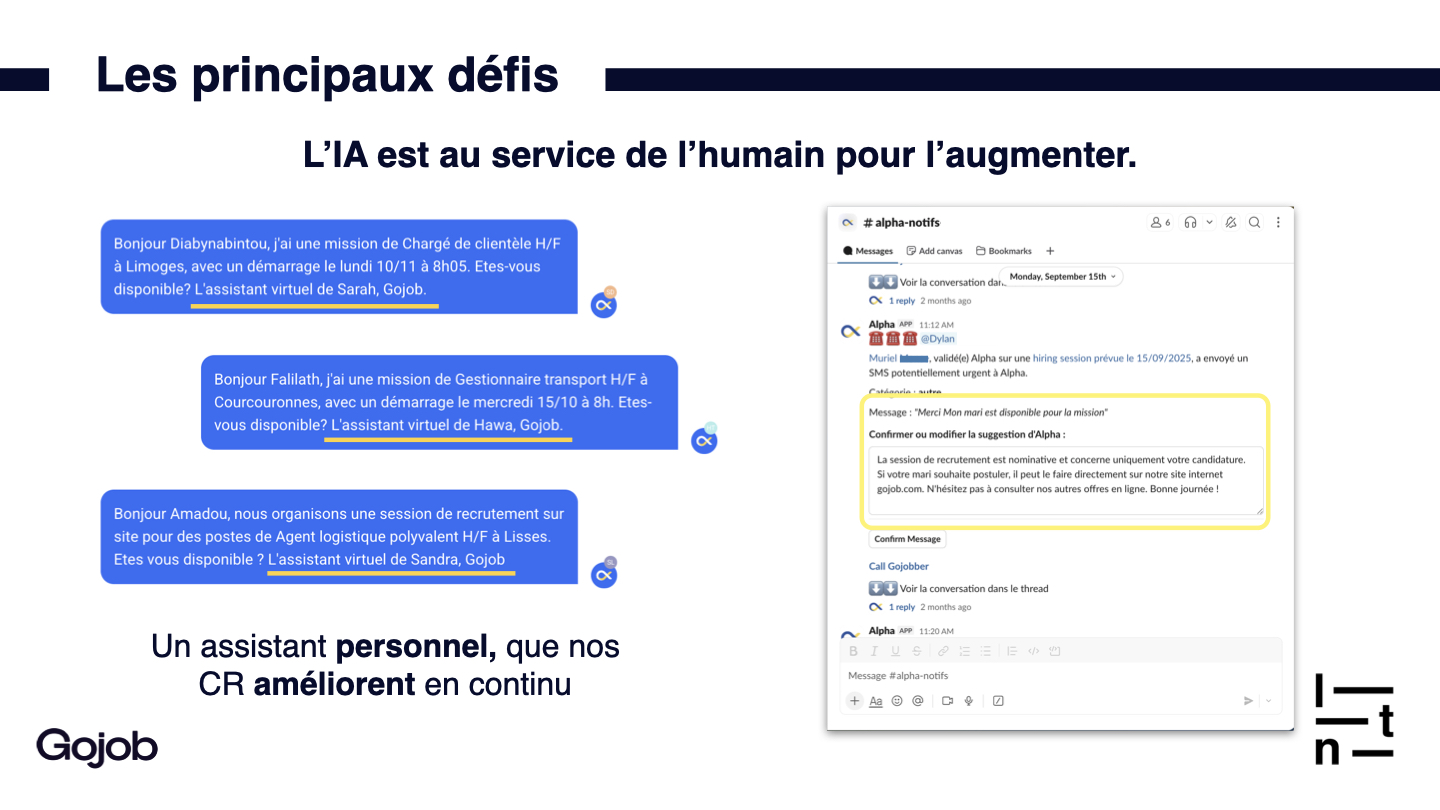
In summary: GoJob shows that well-integrated AI can speed up temporary staffing while strengthening the human element, rather than sidelining it.
Live voice AI: what does it mean for interviews?
- Talk by Julien Lesaicherre (Maki People)
For Julien Lesaicherre, now at Maki People, the verdict is: "The CV is the worst selection method there is".
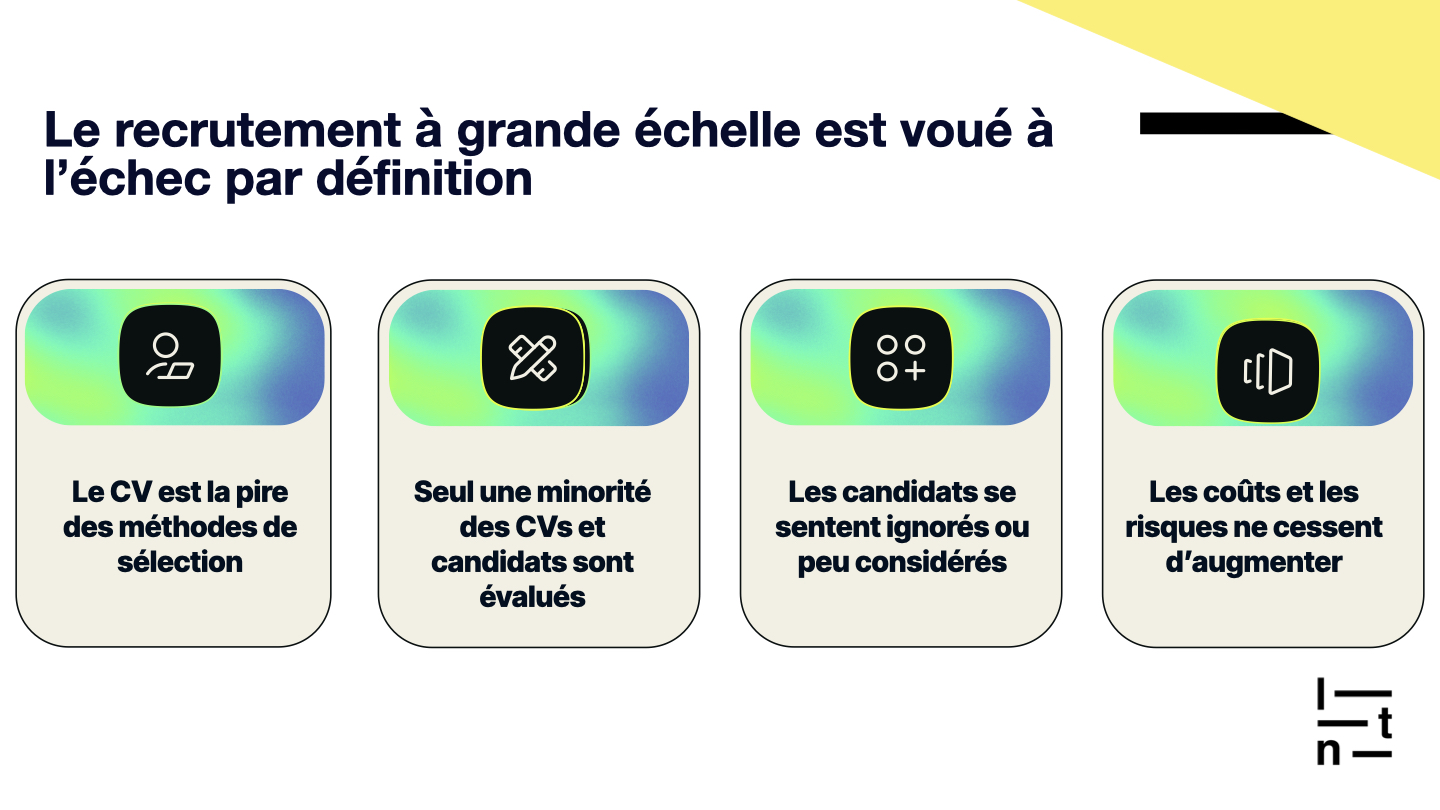
In large-scale recruitment (retail, logistics, customer care, graduate programmes...), only a minority of CVs are actually read. Recruiters process applications in order of arrival, candidates are rarely or poorly followed up, human bias soars... and generative AI only amplifies the phenomenon:
- A massive increase in the volume of applications,
- CVs "optimised" by AI, and therefore increasingly uniform and hard to tell apart.
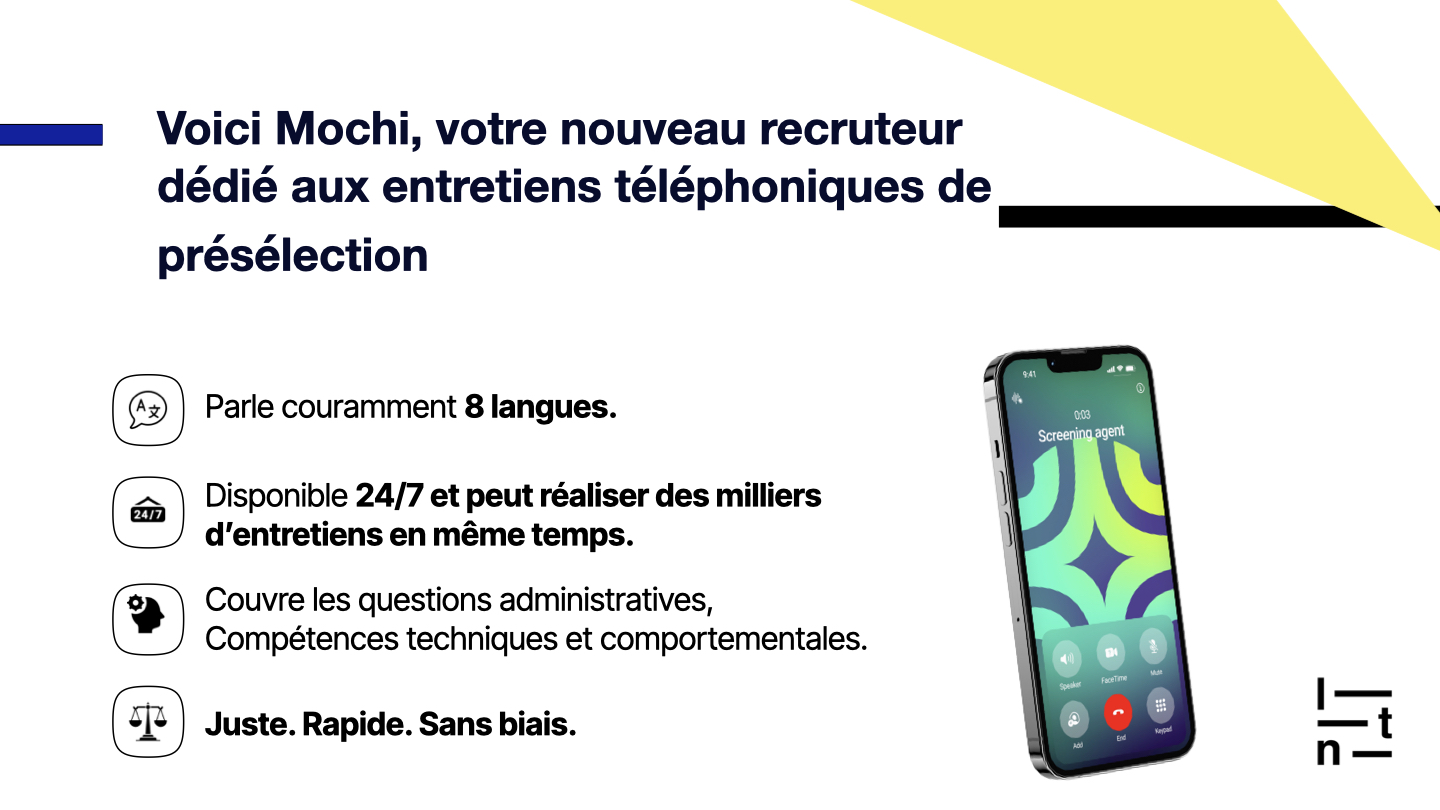
This is where Maki People positions itsvoice AIagents, such as Mochi, a virtual "recruiter" available 24/7, able to conduct thousands of pre-screening interviews in parallel, in several languages, with the same level of quality and patience for every candidate.
In practice, the voice AI agent:
- Calls or calls back the candidate,
- Clearly explains the framework and the next steps in the process,
- Asks a set of standardised questions (prerequisites, availability, behavioural and sometimes technical skills),
- Records and transcribes the conversation,
- Gives the recruiter a usable summary to decide on the next steps.
The benefits that emerge:
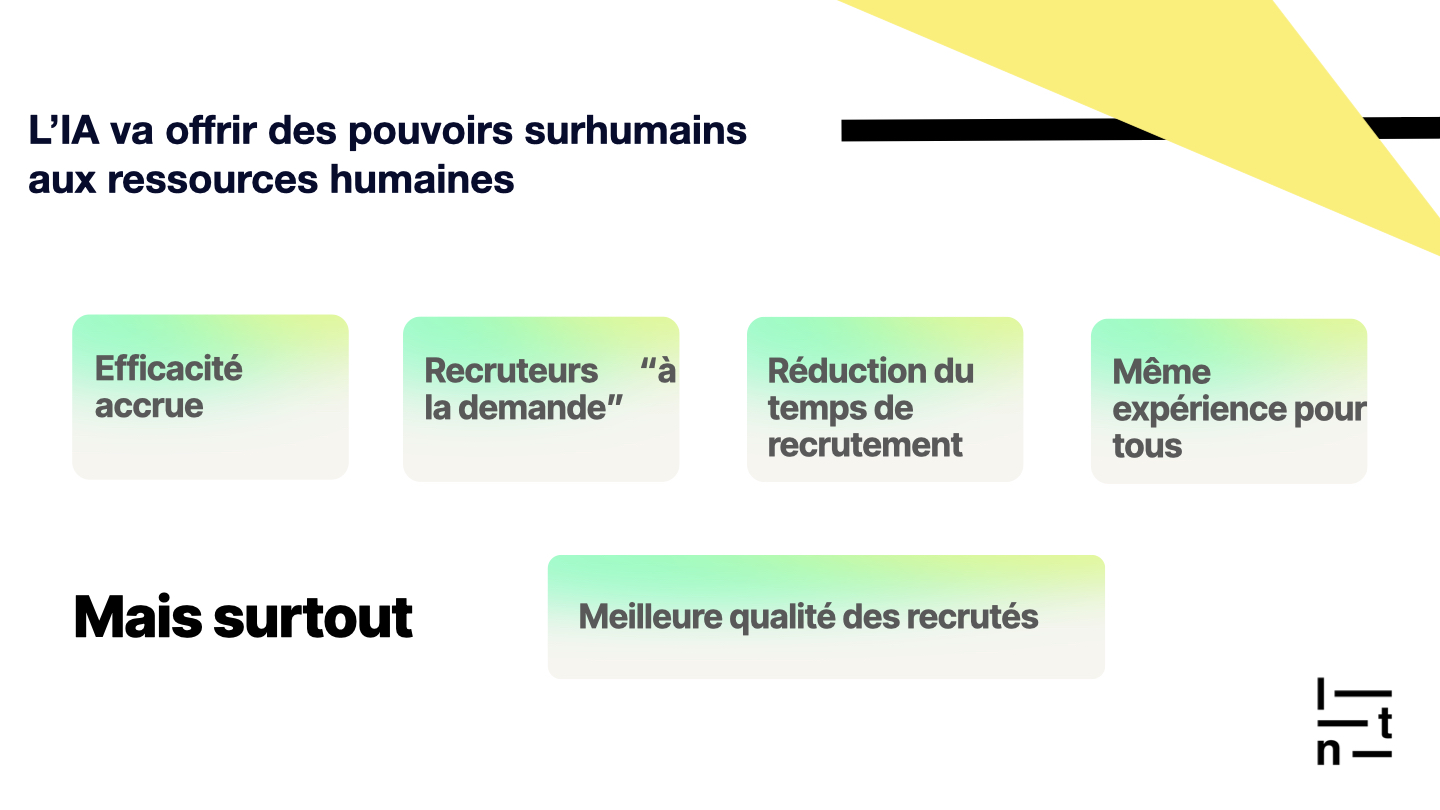
- A fairer experience for candidates (the same process for everyone, faster responses, simple explanations),
- The ability to absorb volumes impossible to handle manually (e.g. 700,000 applications for an international sporting event in just a few days),
- Lower recruitment costs and shorter time to hire,
- Better selection quality, because decisions are based on skills observed in the interview, not on a biased CV.
Key takeaways for recruiters:
- At scale, CV screening is a model that has run out of steam.
- Voice AI makes it possible to bring conversation back where we used to rely on automatic screening.
- It gives recruiters superpowers in terms of volume, while refocusing them on decision-making, relationships and the quality of the experience.
- The challenge is not to replace people but to ensure that human time is devoted to the best moments of the process: dialogue, feedback, decision-making, long-term relationships.
The afternoon programme: legal framework, GDPR, insights from the US, startups and the AI / Recruitment fresco
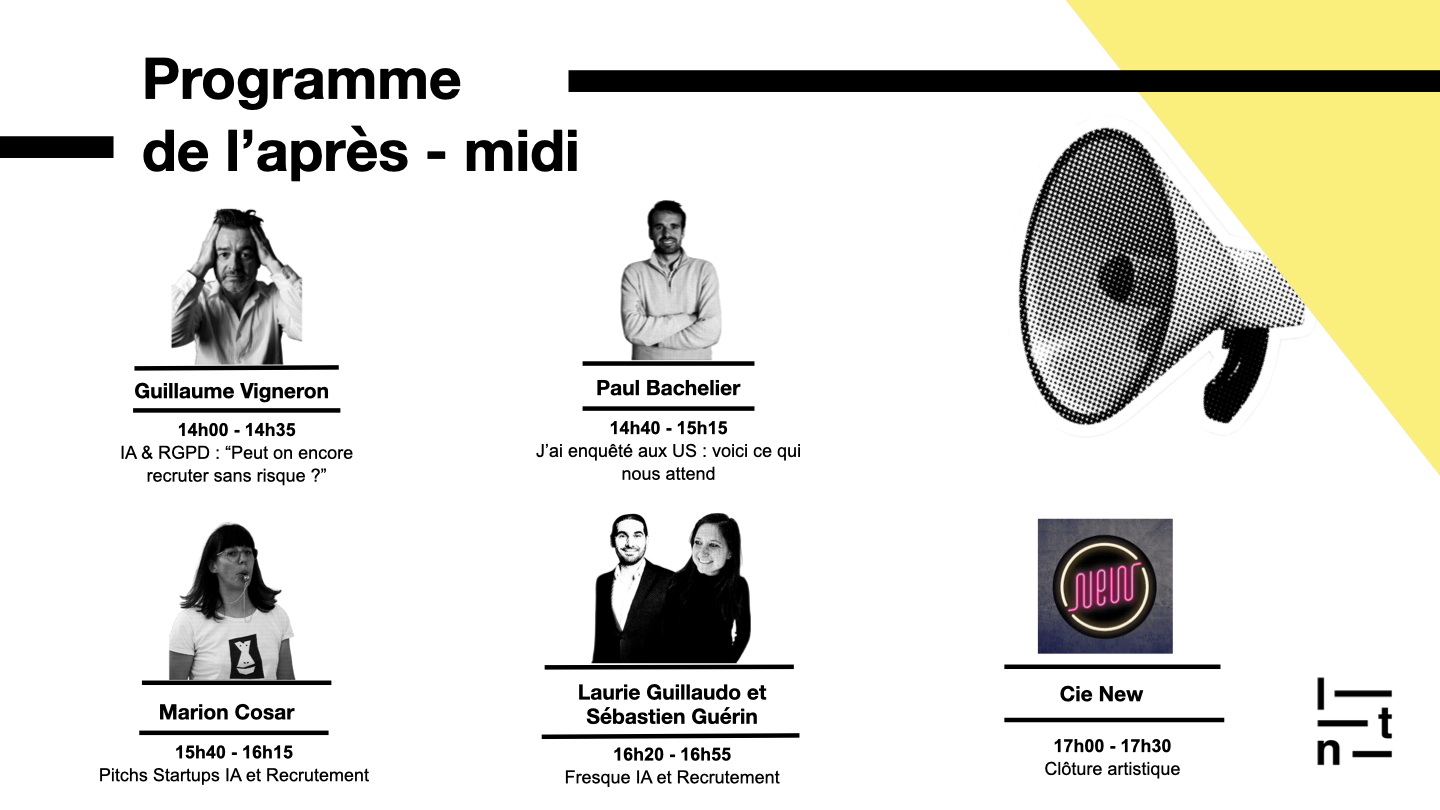
AI & GDPR: can we still recruit without risk?
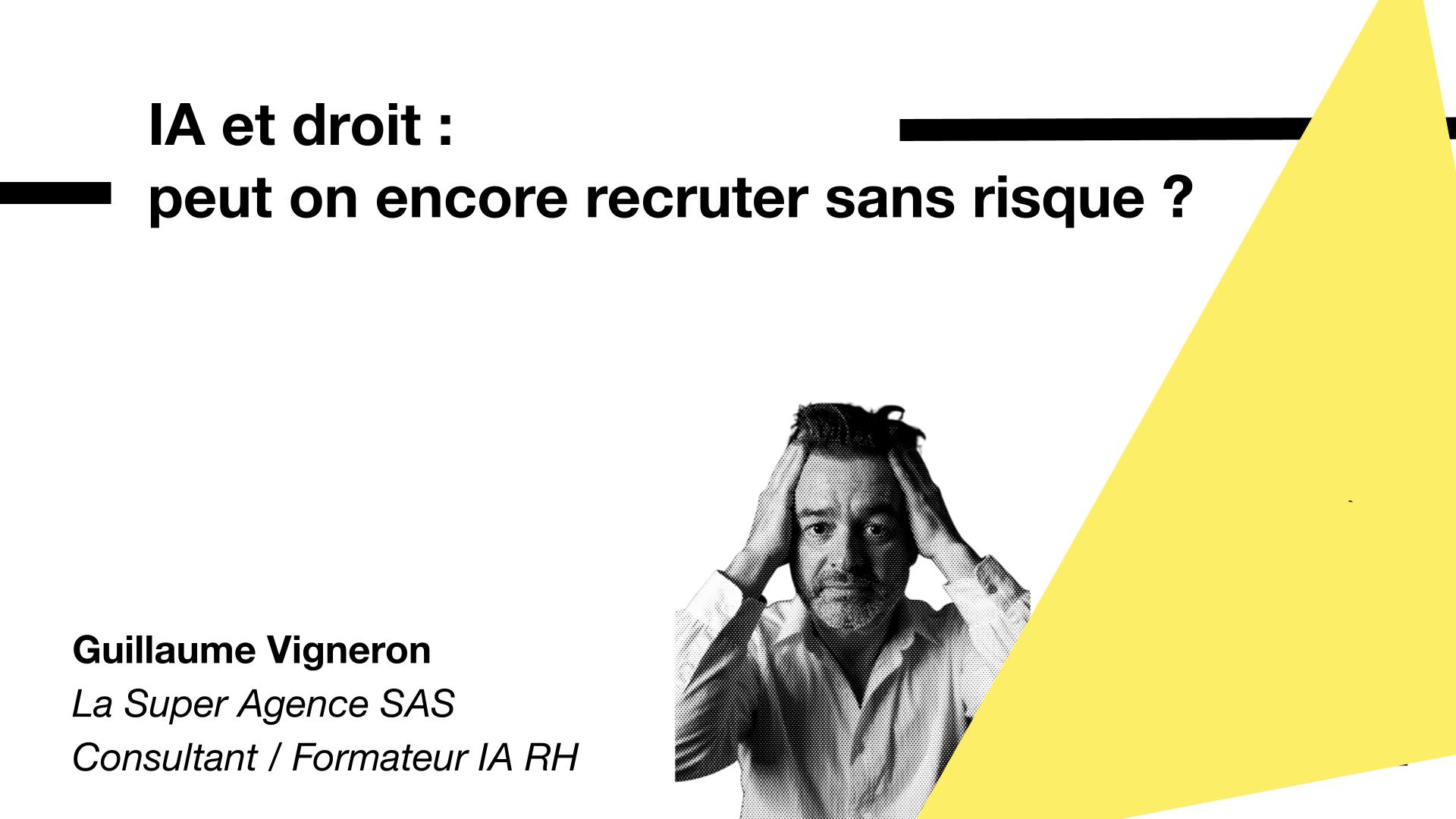
- Talk by Guillaume Vigneron (La Super Agence)
Guillaume Vigneron tackled the subject that often scares people: AI, the GDPR and the legal framework. He took an approach based on practical cases, drawing on the risk pyramid defined by the European AI Act.
This pyramid sets out several levels:
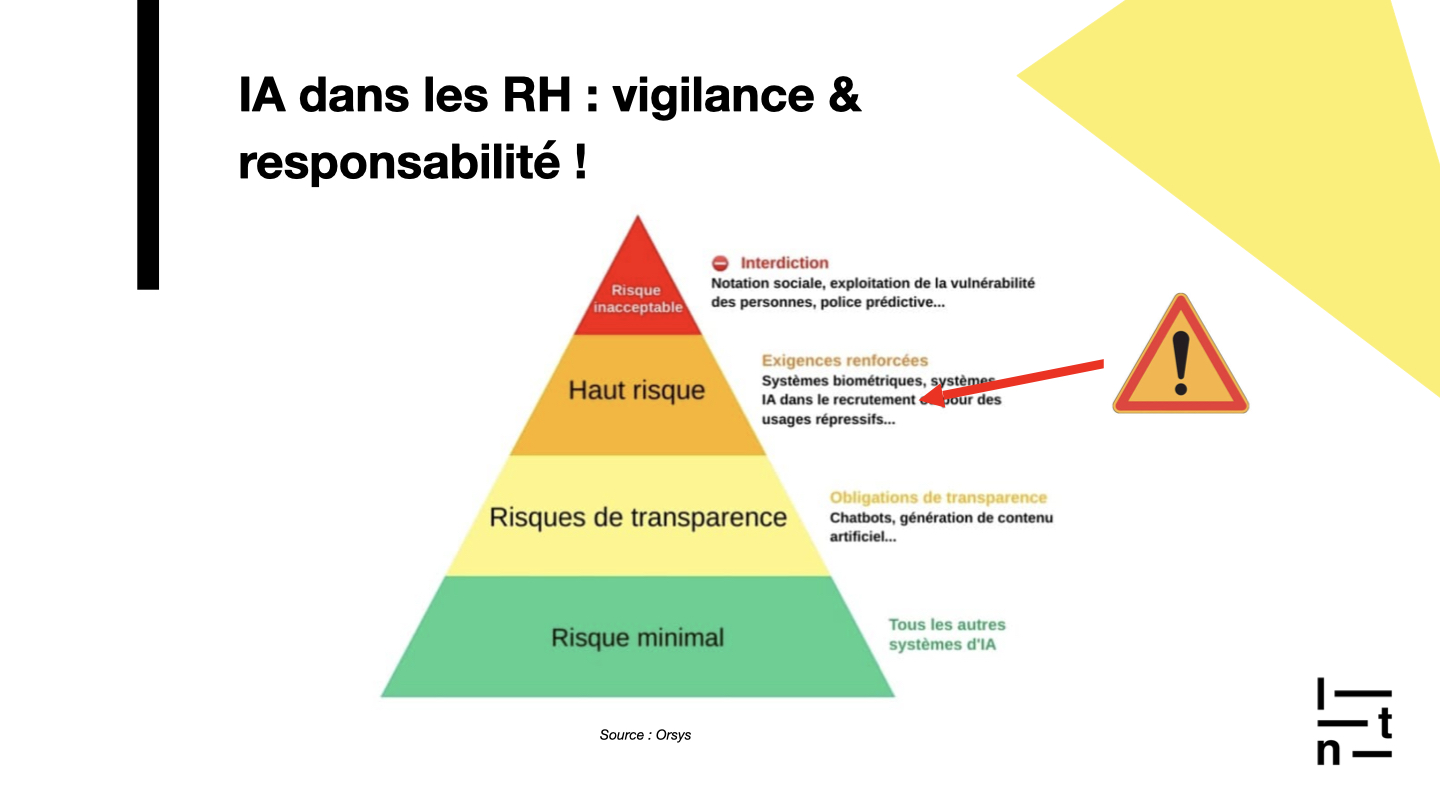
- Prohibited uses deemed incompatible with European values,
- High-risk AI uses, subject to heightened vigilance, with recruitment explicitly included,
- Lower-risk uses, which are easier to regulate,
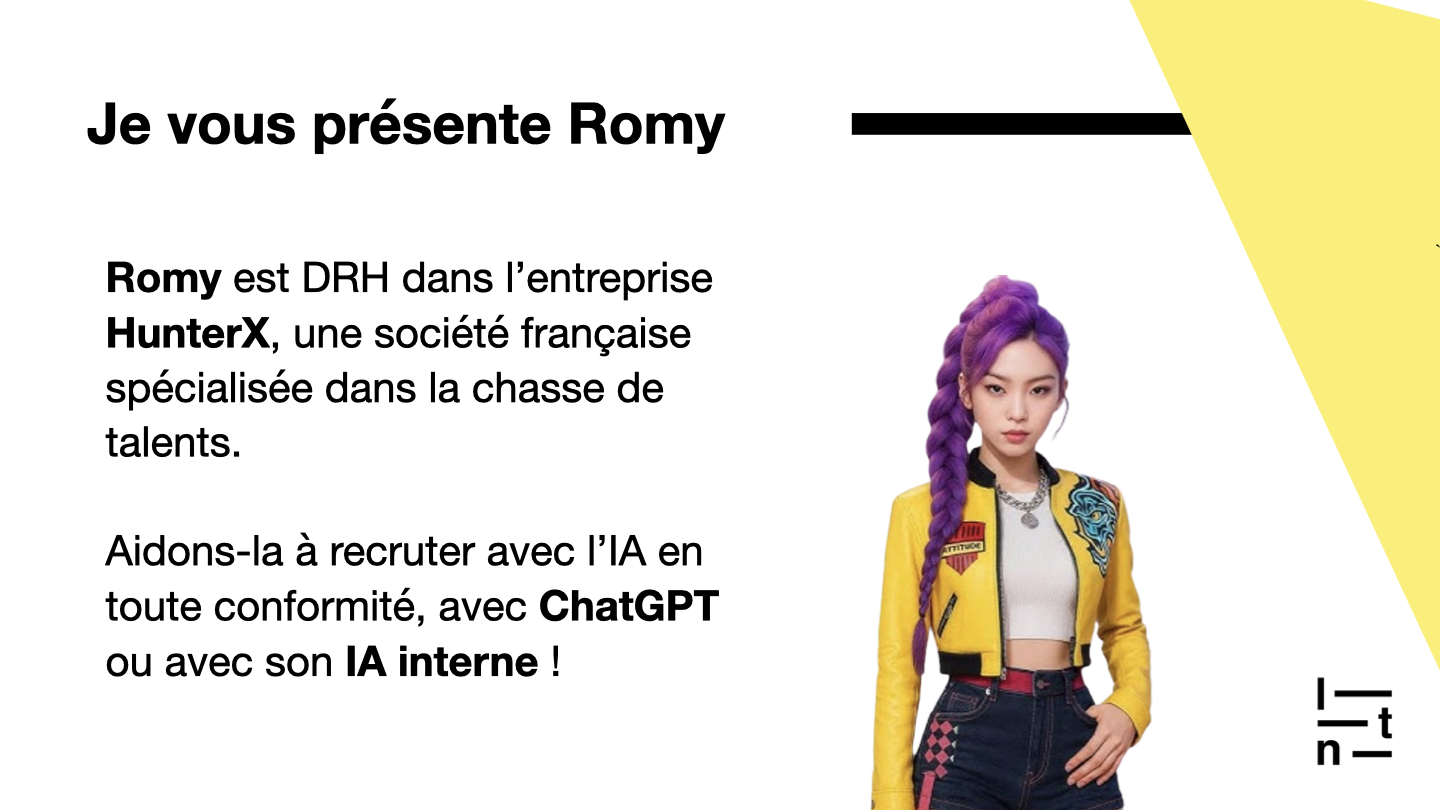
Through the fictional character of Romy, HR Director of an executive search firm, Guillaume reviews different scenarios:
Each time, the question is the same: is it legal? ethical? GDPR-compliant? And what conditions must be met to make the use safe?
The aim is not to discourage innovation, but to show that in recruitment, AI cannot be deployed as a "black box". You need to:
- Clarify the purposes
- Document high-risk processing,
- Work hand in hand with lawyers / the DPO,
- Build in the ethical dimension
1️⃣ The celebrity-inspired avatar
Romy wants to add an avatar inspired by George Clooney to her careers site; to do so, she uses a service offered by an American company.
Can Romy use this George "Cloned" avatar on her careers site?
The site targets Europe, so French law applies. George Clooney is identifiable: this infringes his image rights (Article 9, Civil Code) A mere resemblance is enough to constitute the violation. Romy cannot use it on her careers site.
2️⃣ Copying a job ad found online to rework it in ChatGPT
Romy finds a very well-written job ad online.
She copies and pastes it into ChatGPT to turn it into a new ad for her company.
Can Romy publish this job ad reworked with AI?
Copyright protects the creative effort involved. An original text remains protected (style, tone, structure). Reusing it, even reworked by an AI, breaches Article L. 122-4 of the French Intellectual Property Code. Romy therefore cannot publish this job ad reworked with AI.
3️⃣ Analysing social media interactions cross-referenced with the candidate pool
Romy uses AI to analyse interactions on her company's social media (likes, comments, shares...).
In doing so, she hopes to spot good candidates who have interacted and who are already in her candidate pool.
Can Romy use AI to cross-reference social media data with her talent pool?
Social media data is public, but cross-referencing it with a candidate pool using AI constitutes new processing. This new processing has a different purpose, which must rest on its own legal basis (Article 5 of the GDPR). Romy must therefore inform the people concerned of this new use of their data.
4️⃣ CV analysis by an in-house AI after pseudonymisation
Romy publishes a job ad in which she clearly informs candidates that their CVs will be analysed by an in-house AI, only after being pseudonymised. She wants to use this AI to screen applications and make pre-selection easier.
Can Romy analyse these CVs under these conditions?
CV analysis is permitted subject to conditions, notably the use of an in-house AI. Romy complies with the GDPR and the AI Act. This requires supervised pseudonymisation, human oversight, no 100% automated decisions and documentation proving the system's compliance.
5️⃣ Analysis of structured interviews by ChatGPT
Romy wants to conduct structured interviews and have the results analysed by ChatGPT. She clearly informs candidates, makes sure the data is anonymised beforehand and writes her data protection impact assessment (DPIA, or AIPD in French), which reveals no particular risk. Given the urgency, she intends to go ahead without the approval of the CNIL (the French data protection authority) before launching her interviews.
Can Romy launch her interviews without the CNIL's approval?
Romy is entitled to launch her processing without prior approval from the CNIL, provided that the impact assessment shows that the risks to people's rights and freedoms are under control. The supervisory authority is only consulted if the residual risk remains high, in accordance with Article 36 of the GDPR.
I investigated in the US: here is what lies ahead
- Talk by Paul Bachelier (CEO, HireSweet)
For Paul Bachelier, the best way to anticipate the future of recruitment in Franceis to look at what is already happening in the United States. Not because they have technologies unavailable to us (tools now arrive almost simultaneously on both sides of the Atlantic), but because the mindset there is very different: AI is approached there as an opportunity to seize, not as a threat to endure.
In terms of context, the American market is no "easier" than ours: falling confidence, cautious business leaders, a staffing industry in slight decline, political tensions...
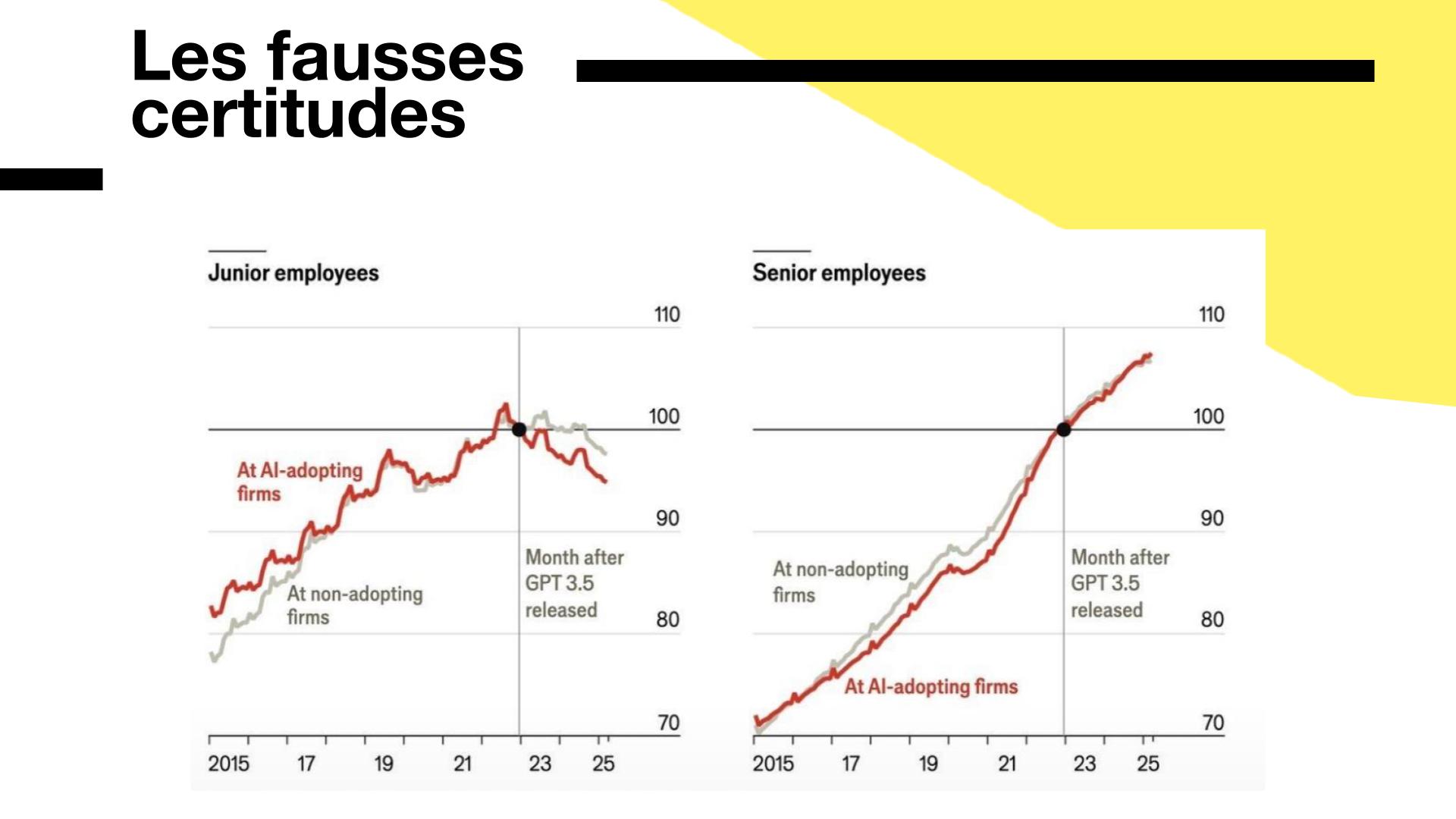
On the other hand, one trend is clear: junior positions are declining, senior positions are growing, particularly since the arrival of generative AI. AI is not eliminating recruitment, but it is transforming the profiles sought and the skills expected.
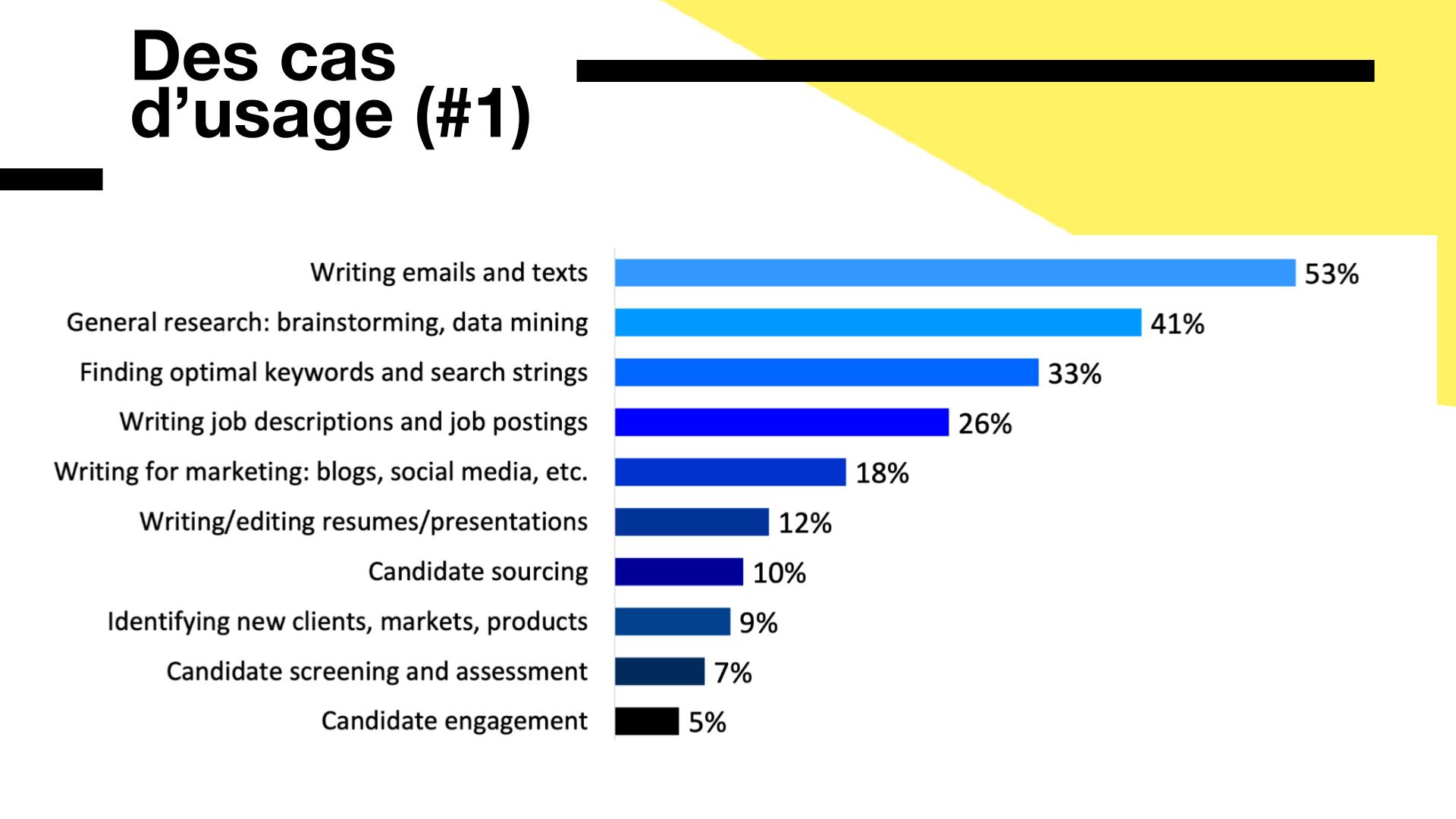
American companies have already widely integrated AI into their practices: writing job ads and messages, searching for information, preparing interviews... and then, at a later stage, AI agents and voice AI to automate entire sections of the process (qualification, scheduling, follow-up, transcription). The productivity gains are real, even if marketing sometimes exaggerates the figures, and the real question is no longer "should we use AI?" but "which tool should we choose, how do we integrate it and how do we measure its impact?".
Finally, Paul stresses one point: the difference is no longer made by technology, but by the ability to reinvent yourself. It will not be AI that replaces recruitment professionals, but recruiters who master AI who will gain the edge over those who stay on the sidelines.
AI & Recruitment startup pitches: 5 tools, 5 visions of the future
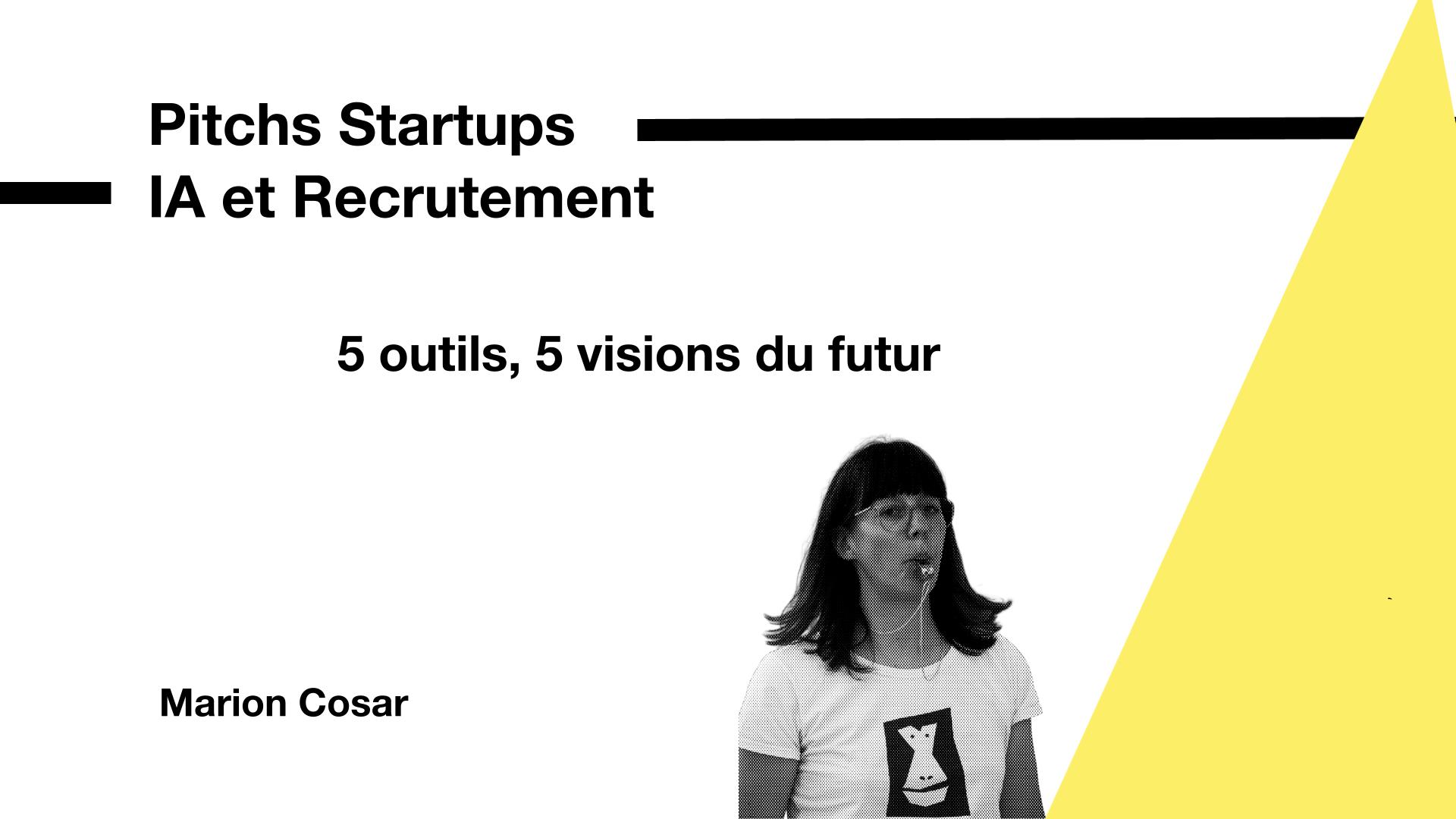
- Hosted by Marion Cosar (Managing Director, LEDR - L'École Du Recrutement)
Marion Cosar introduced this series of pitches by recalling a key point: AI reinforces the illusion that "recruiting is easy". Type a query, get a correct and quick answer... and settle for average. Yet, in her view, the role of recruiters is precisely to be better than the machine: experts in their field, able to challenge, reframe and correct what AI proposes. AI is not a shortcut, but a mirror of our skills: if we don't know how to recruit, it will only reflect our limitations.
Then, on stage, five startups came along with the same common thread: these technologies can genuinely save time and improve quality, provided you keep a critical mind, stay in control... and don't let AI do the job in the recruiter's place.
In this context, the 5 startups came to pitch their vision of the future of AI-assisted recruitment, in 2 minutes flat:
- Kalent: An AI copilot for direct approach, designed to quickly generate qualified interviews through a multichannel approach (email, WhatsApp...). The platform relies on a massive pool of enriched profiles and offers optimised outreach sequences, while ensuring GDPR-compliant use.
- Omogen.ai (Voice agent "Alex"): A voice AI agent specialising in pre-qualification, integrated directly into the ATS, "Alex" calls candidates, asks the right questions, collects and structures information and frees up time for recruiters. This agent makes it possible to handle volumes of applications that would otherwise be impossible to manage manually.
- Shortlist AI : An AI designed to analyse, automatically sort and prioritise applications in order to generate, in a matter of seconds, a genuinely usable shortlist. The tool interprets skills, experience and weak signals to bring the best profiles to the surface, while leaving the recruiter to make the decision.
- Bambboo: A solution focused on employee referrals andnetwork activation, making it easy to identify and mobilise talent from your own ecosystem. The platform automates a large part of the follow-up, tracking and engagement mechanics to keep employees and referrers involved.
- Noota: An AI assistant dedicated to interviews, able torecord, transcribe, analyse and structure conversations, in order to produce usable interview reports and help make decisions more objective through consistent analysis of answers, while reducing recruiters' administrative workload.
AI & Recruitment fresco: mapping the uses that will change everything
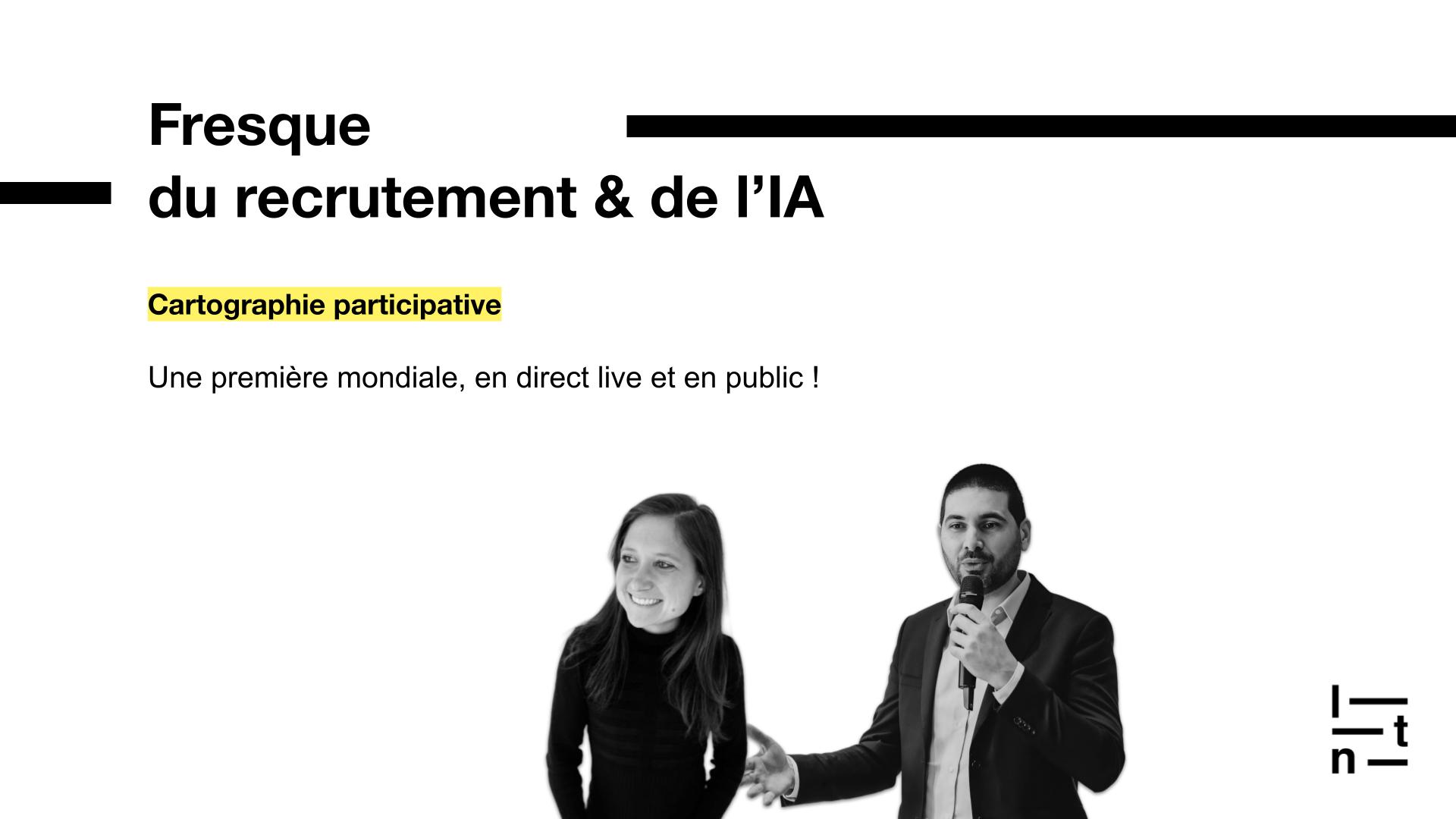
- Hosted by Laurie Guillodo (Splendup) & Sébastien Guérin (RecOps)
To close the day, Laurie Guillodo and Sébastien Guérin ran a live AI & Recruitment fresco with all the participants.
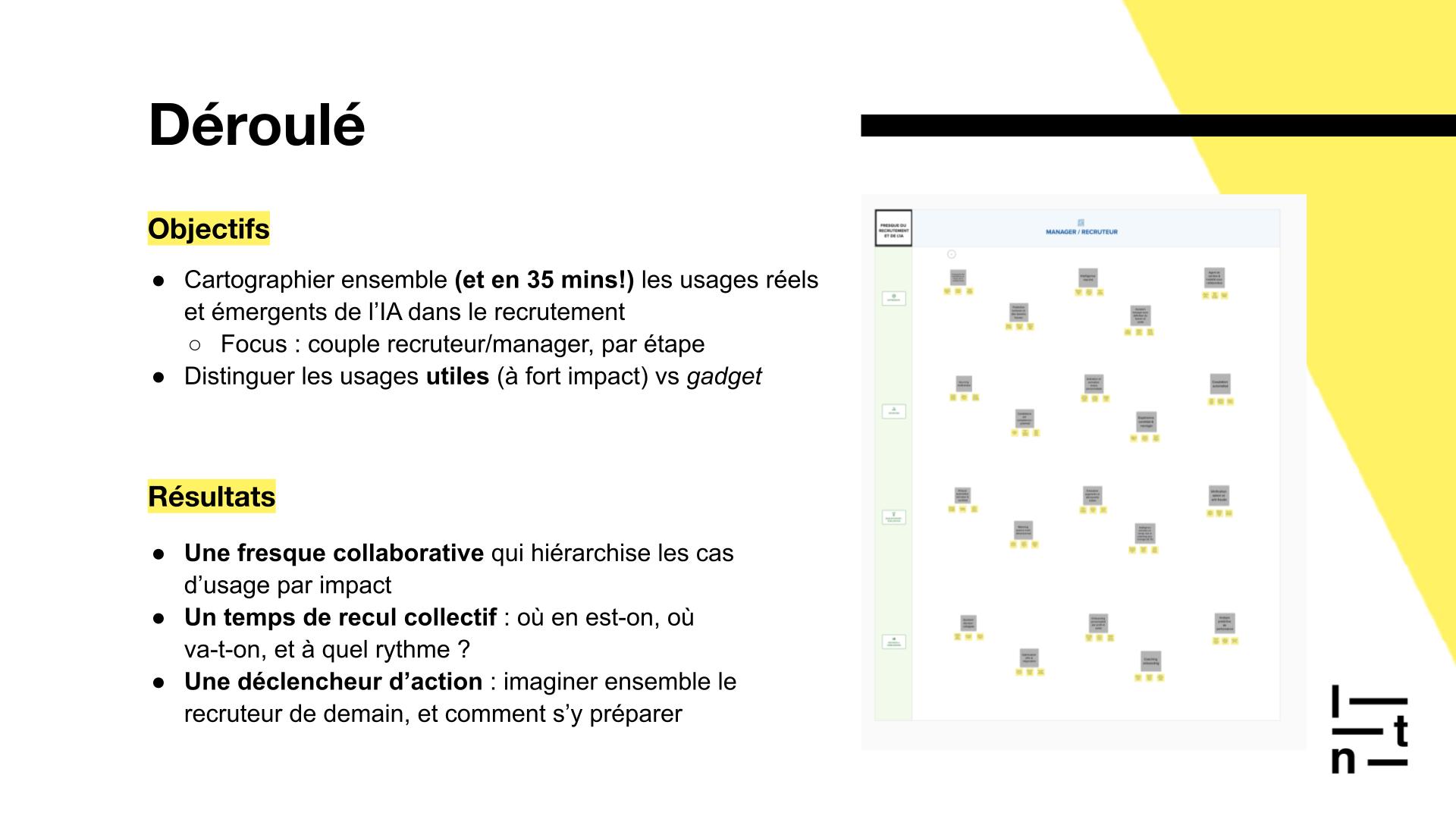
Four main stages of recruitment:
- Defining the need: The priority is real-time skills mapping and internal mobility. In other words, knowing better what you already have before launching an external recruitment.
- Sourcing: Two uses come out joint first :
- applying based on skills / potential (and therefore the gradual death of the CV)
- and the smart activation / nurturing of talent pools: automated multichannel sourcing remains important, but is no longer seen as the only critical lever.
- Assessment: Automated pre-qualification is seen as the most game-changing use case in the short term, far ahead of administrative checks or compliance, even though these feature heavily in the discourse.
- Decision and onboarding: Onboarding personalised by profile and by role outstrips everything else. The room clearly envisions a future in which onboarding will be much more refined, gradual and tailored to each person.
The fresco ended on an open question: what will tomorrow's recruitment really look like?
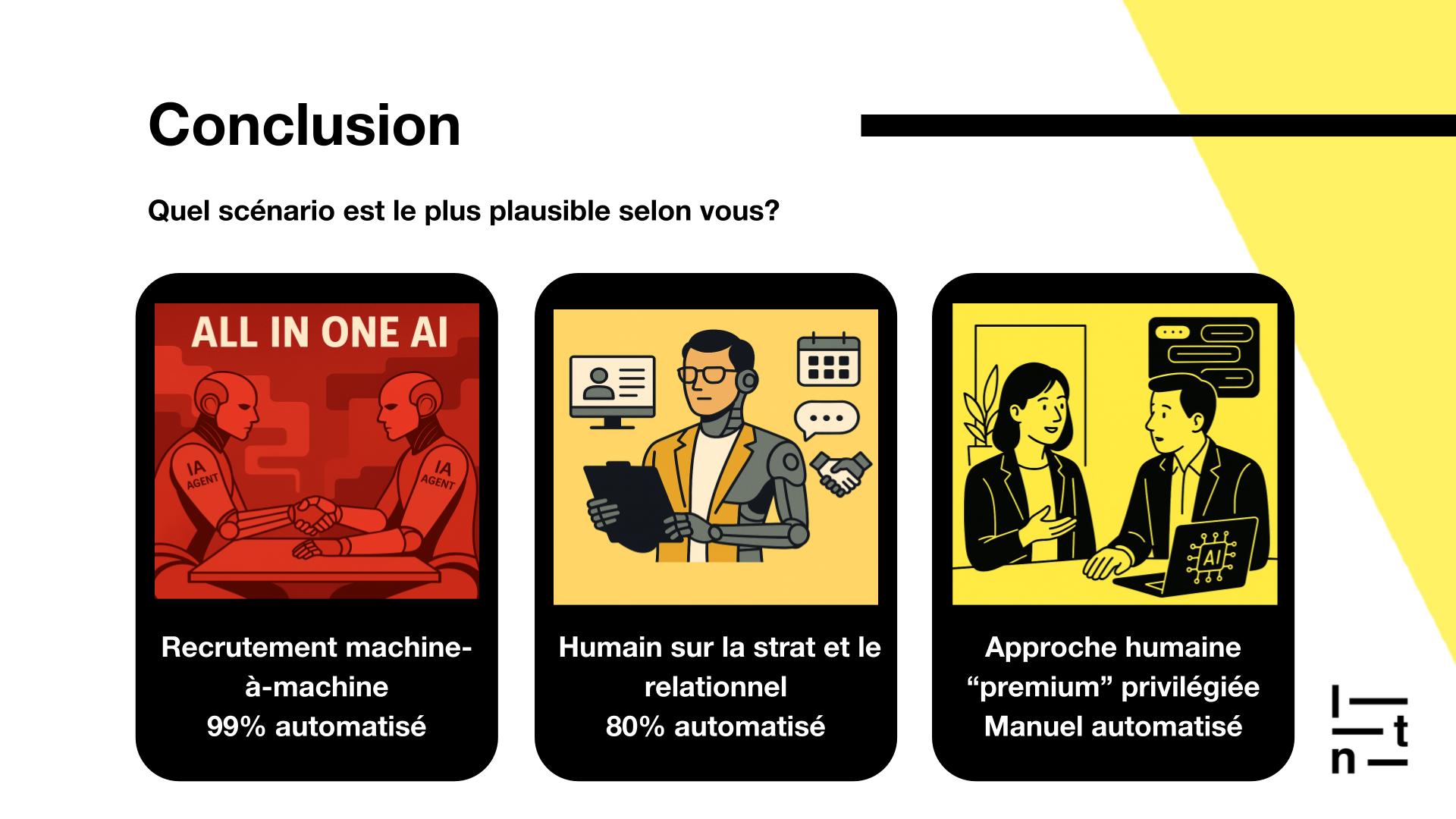
1. Recruitment that is machine to machine ? (the company's AI vs the candidate's AI?)
2. A "cyborg recruiter", relieved of 80% of operational tasks.
3. A Human Firstmodel, where AI automates the background work, but where the real differentiator remains the relationship, listening and support.
The room was split between scenarios 2 and 3, proof that everyone can clearly see AI taking its place in processes, but without giving up on keeping people at the centre.
Conclusion
The first edition of TalentLab Futur offered a glimpse of what lies ahead for the recruitment function in the coming years. Across different perspectives, one idea stood out:
AI is not here to replace the recruiter, it is redefining their scope, their impact and their added value.
Each speaker showed it in their own way: AI does not act as a substitute, but as a multiplier.
It speeds up repetitive tasks, clarifies information, proposes options, secures processes and smooths the relationship with candidates.
It frees up time, but above all, it forces every professional to rethink the way they work: challenging their habits, strengthening their stance as coach, strategist and facilitator.
This transformation is not limited to tools. It is a cultural transformation.
An evolution in skills, in mindset and in the way we approach complexity, data and even creativity.
The organisations that benefit will be those that see AI not as an automatism to be added, but as a lever to be orchestrated intelligently.
And if this day revealed anything, it is that the value of the profession is not disappearing: it is shifting.
It is leaving the realm of “doing” to join that of “thinking”, “connecting” and “deciding”.
It is moving from manual data entry to analysis, from automatic follow-ups to support, from CV screening to skills assessment.
TalentLab Futur was not just trying to predict the future.
It showed something more essential:
this future is already being built, every day, by those who choose to learn, experiment and move forward with AI rather than against it.
AI... but not only.
It is still people who give meaning, who make the decisions and who create value. The real future of recruitment will depend above all on professionals' ability to learn, adapt and work together differently.
Further reading
➡️ TalentLab 2025: the 4 key trends shaping tomorrow's recruitment
