A wide choice of platforms for candidates and recruiters
In just a few decades, thousands of job sites have emerged around the world. Every sector and every region has its favourite platforms. There is no such thing as a universally “best” job board. The assessment depends on a range of criteria: traffic, volume of job ads, candidate usage, recruiter satisfaction and many more. This article offers a detailed overview of the major players, both global and regional, drawing on recent data and strategic perspectives to better understand the complexity of this market.
The giants of global traffic
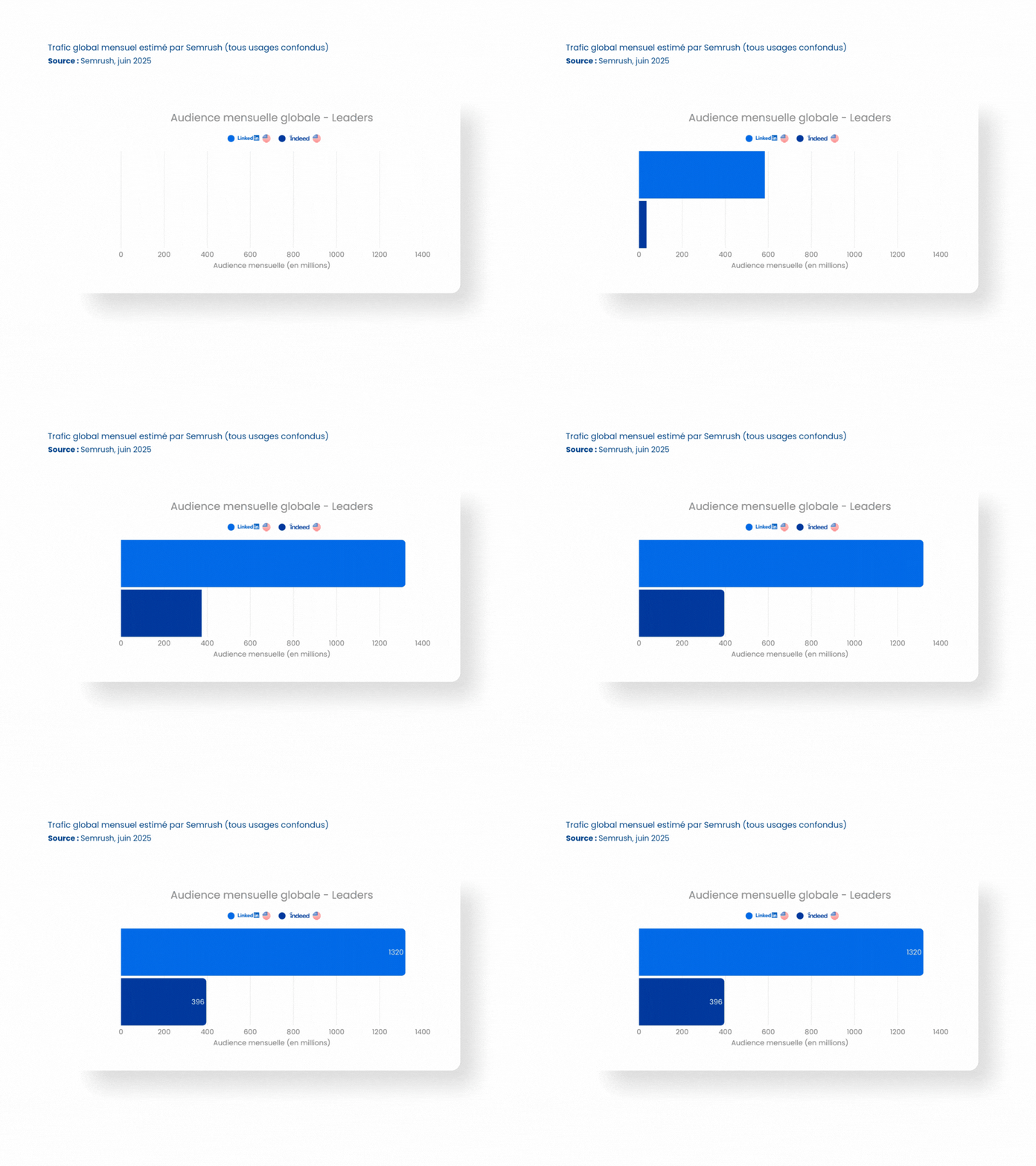
In terms of monthly visitors on a global scale, two heavyweights dominate: LinkedIn and Indeed. According to Semrush, LinkedIn receives around 1.3 billion monthly visits (June 2025), far ahead of Indeed, which records around 400 million visits (June 2025).
By way of comparison, Glassdoor, ZipRecruiter and other long-established sites attract only a few tens of millions of visits. Monster, once a pioneer of online recruitment, has seen its traffic collapse to the point of announcing its gradual closure in 2025.
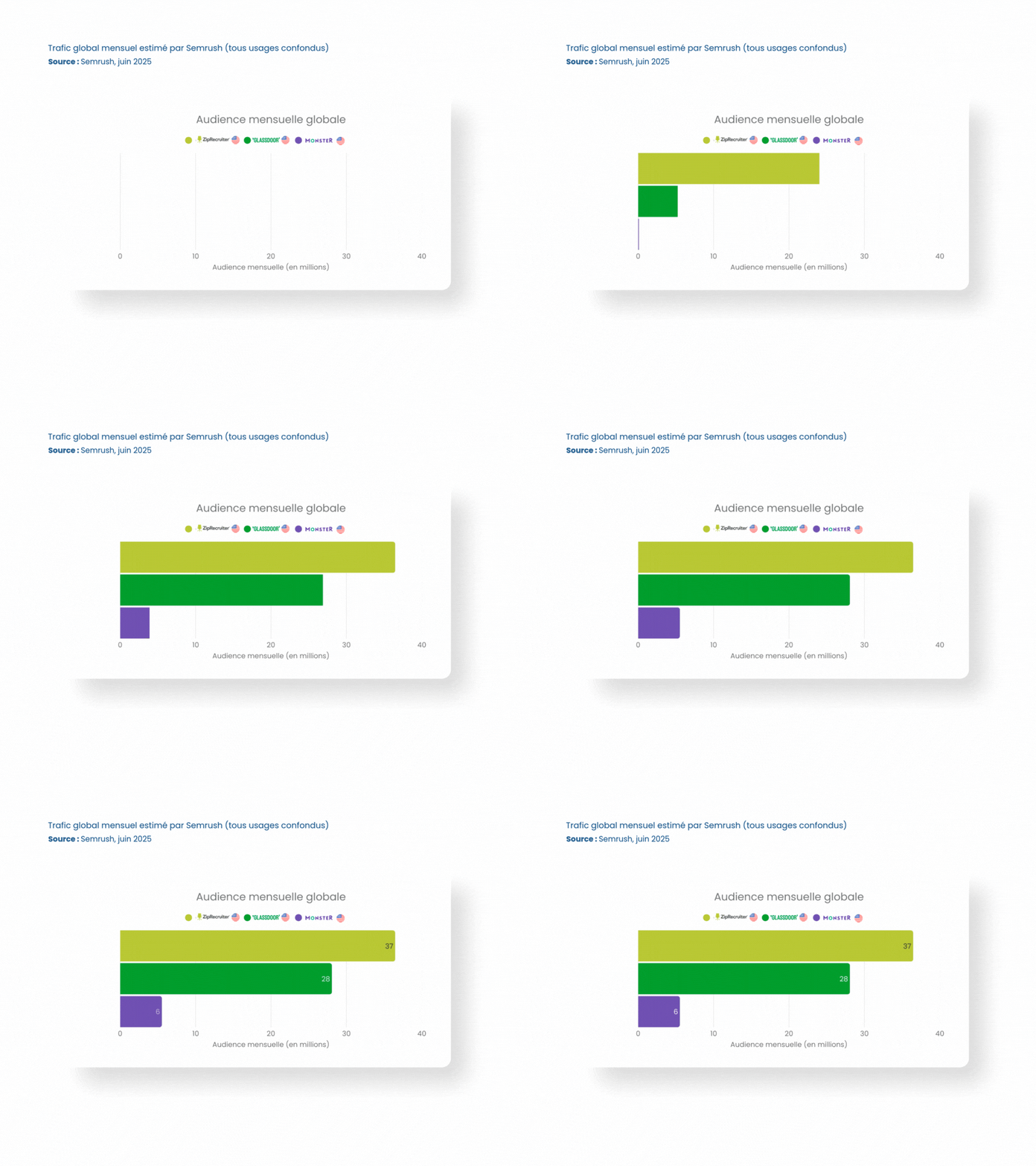
This shift shows just how much the market has become concentrated: LinkedIn benefits from its status as a multi-purpose professional social network (networking, content, sourcing), while Indeed has established itself as a powerful job ad aggregator, a true job search engine.
The disappearance of Monster symbolically marks the end of an era and highlights the massive shift of traffic and attention towards these two leaders. The long-established players retain a degree of brand awareness, but their real influence is waning in the face of the near-exclusive dominance of LinkedIn and Indeed.
General versus specialist platforms
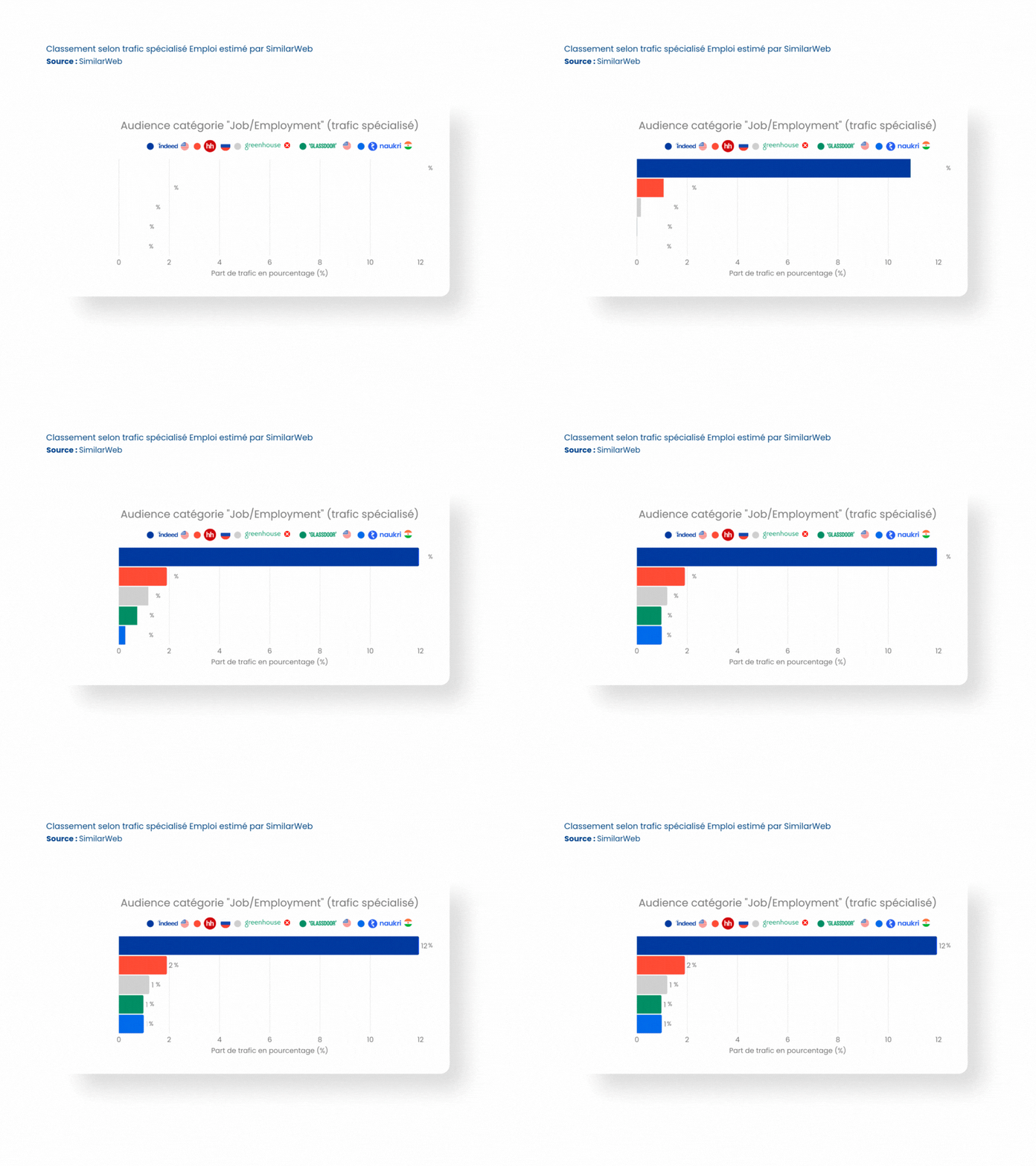
Beyond the world's leading job boards, the digital employment and human resources ecosystem is made up of many different platforms. Indeed remains the leader in this ecosystem in terms of traffic. It is followed by several job boards that focus on niches or specific segments (countries, continents, employer brand). Greenhouse for its part combines a job board and an ATS (Applicant Tracking System), which explains its presence in this breakdown of specialist traffic. It enriches and structures this digital ecosystem by representing the ATS (Applicant Tracking System) component.
Indeed alone captures around 12% of all employment-related traffic, far surpassing regional sites such as hh.ru in Russia or Naukri in India, or ATS platforms such as Greenhouse, which each account for around 1 to 2%.
The leaders by country/continent
In each region, local job sites often remain more popular than the major international platforms.
- Russia: hh.ru (HeadHunter) is the undisputed leader with 66.4 million monthly visits, well ahead of its competitors.
- India: Naukri.com dominates with 22.24 million visits in June 2025 (+14.7% compared with May). It remains well ahead of Monster India, Freshersworld and LinkedIn India.
- China: the market is divided. Boss Zhipin (zhipin.com) attracts around 7.5 million visits, 51job.com around 5 million, and Liepin nearly 3.2 million. Each player retains a strong position in certain niches or regions, while LinkedIn and Indeed remain marginal there.
- Africa and Latin America: several countries have their own leaders. In South Africa, these are CareerJunction, PNet and Jobmail; in Nigeria, Jobberman; in Argentina, Bumeran; and in Latin America, Computrabajo and ZonaJobs.
At a global level, LinkedIn and Indeed remain well known, but national platforms often dominate locally.
Volume of job ads published
The volume of job ads published is another key indicator when analysing the job board market. According to a study carried out by JobsPikr in 2023, Indeed and CareerJet share a significant portion of the global market, with around16% and ~14% of unique job ads respectively. LinkedIn, CareerBuilder and Jooble follow with around 10%, 9% and 9% of job ads.
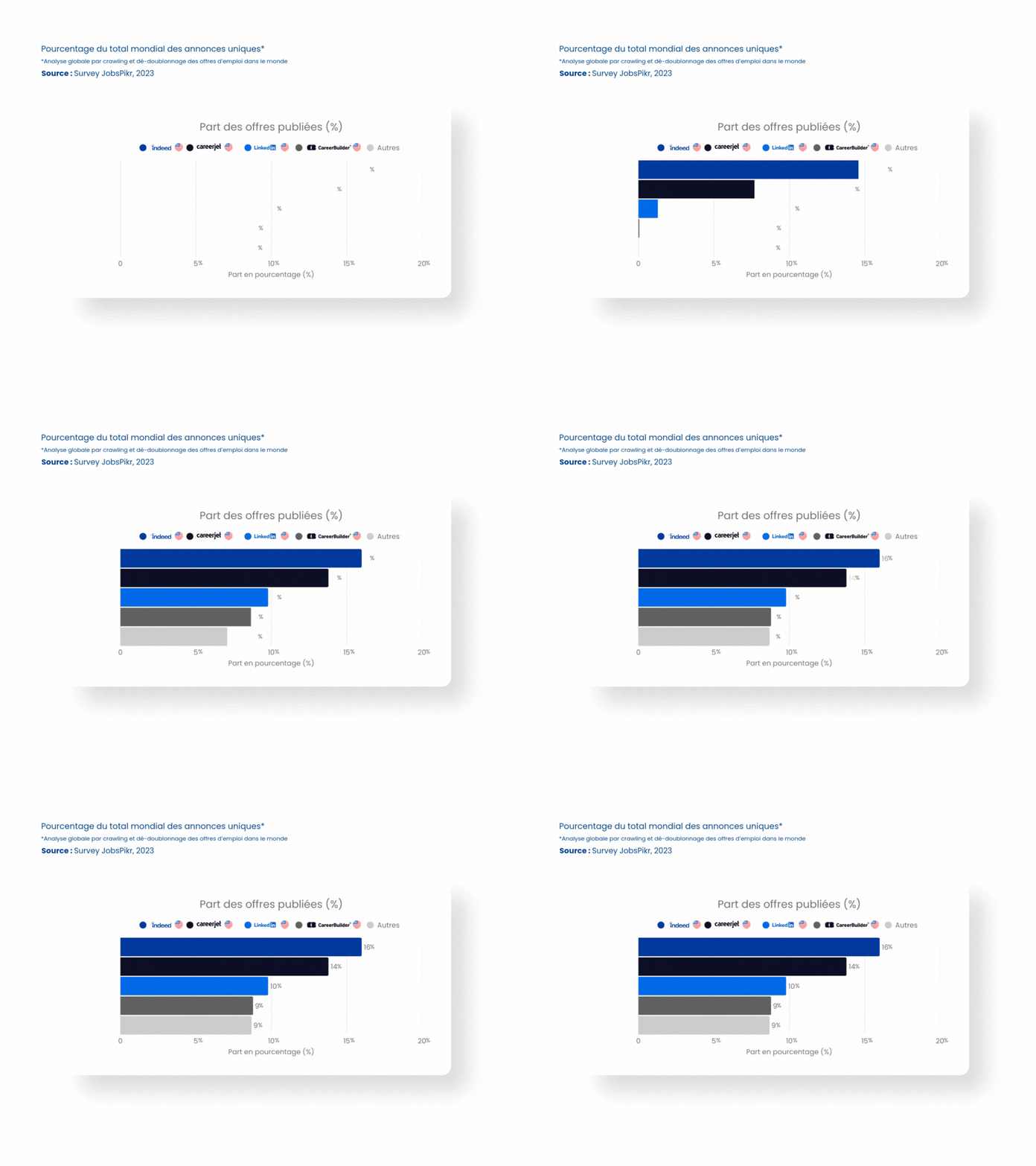
While Indeed and CareerJet dominate in terms of volume, LinkedIn is often valued for the quality of its profiles and the effectiveness of its sourcing, rather than for the number of job ads published. It is also worth noting that many job ads are duplicated, which can reduce their real value. LinkedIn remains one of the main direct sourcing channels, offering recruiters advanced tools to access candidate profiles.
The most common practices
On the candidate side
Traffic alone does not reflect the habits of job seekers. A CandidatePicker report from February 2024 reveals that 67% of active candidates use LinkedIn to look for work, compared with 15% for Indeed and 12% for ZipRecruiter.
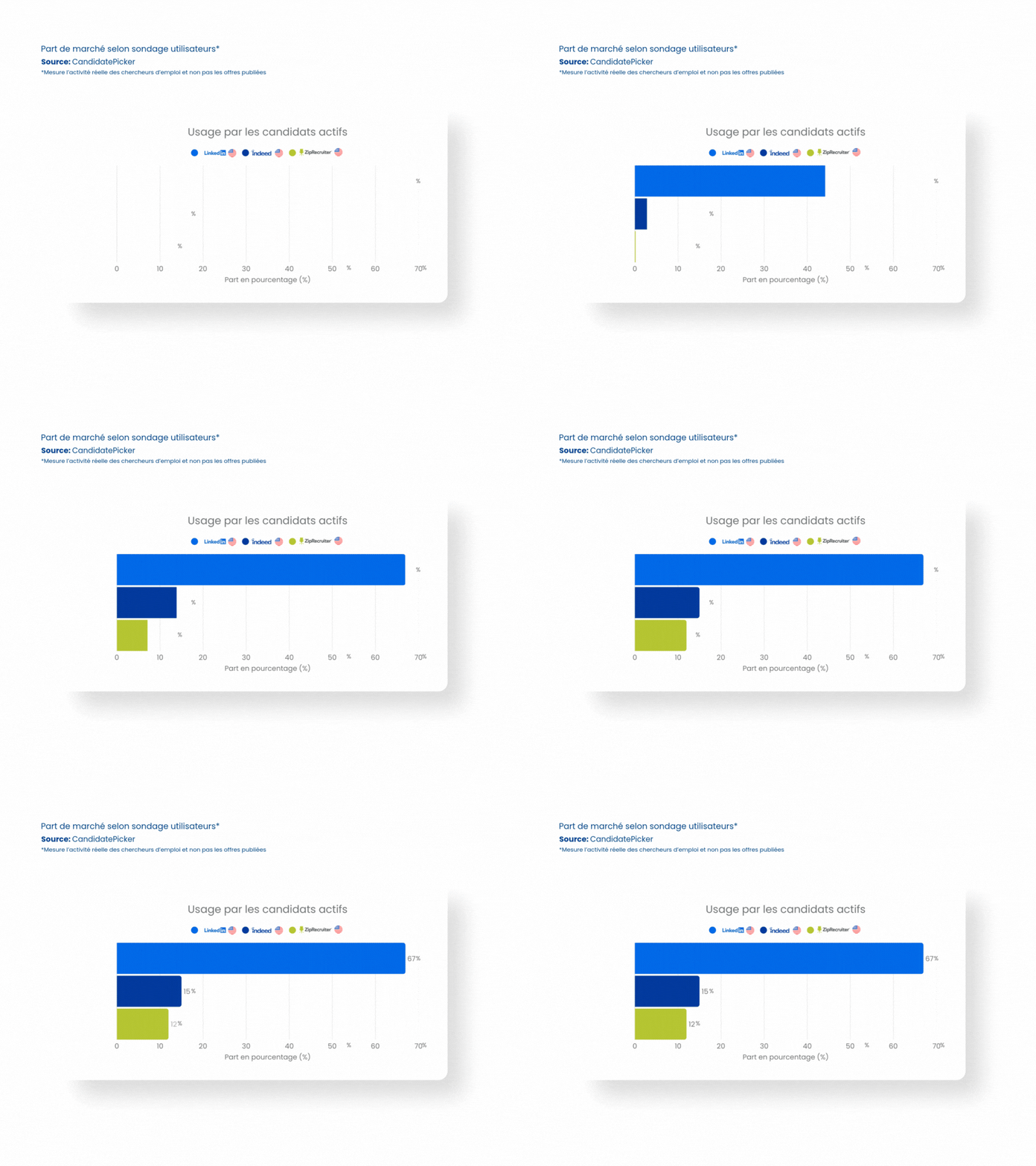
These figures show that candidates often favour networks and referrals, LinkedIn's strengths, over the sheer volume of job ads. Indeed attracts more mass “passive” browsing, while LinkedIn captures most of the active interactions.
On the recruiter side: effectiveness and practices
Recruiters continue to make extensive use of traditional job boards to publish job ads and source candidates. However, professional social networks (LinkedIn, Twitter, GitHub, Behance) are gaining ground. Social networks such as TikTok, Instagram and Facebook are also becoming, for some recruiters, a genuine opportunity to widen their search.
As for the two heavyweights, LinkedIn and Indeed, it would appear that LinkedIn remains the preferred choice for targeted sourcing of qualified profiles, while Indeed makes it possible to advertise a job widely at lower cost. LinkedIn's paid tools, such as Sales Navigator and Recruiter, are becoming essential despite their rising cost.
“Talent Community” approaches seem to be gaining ground among recruitment professionals, allowing certain tools to develop accordingly, in particular through the use of social networks.
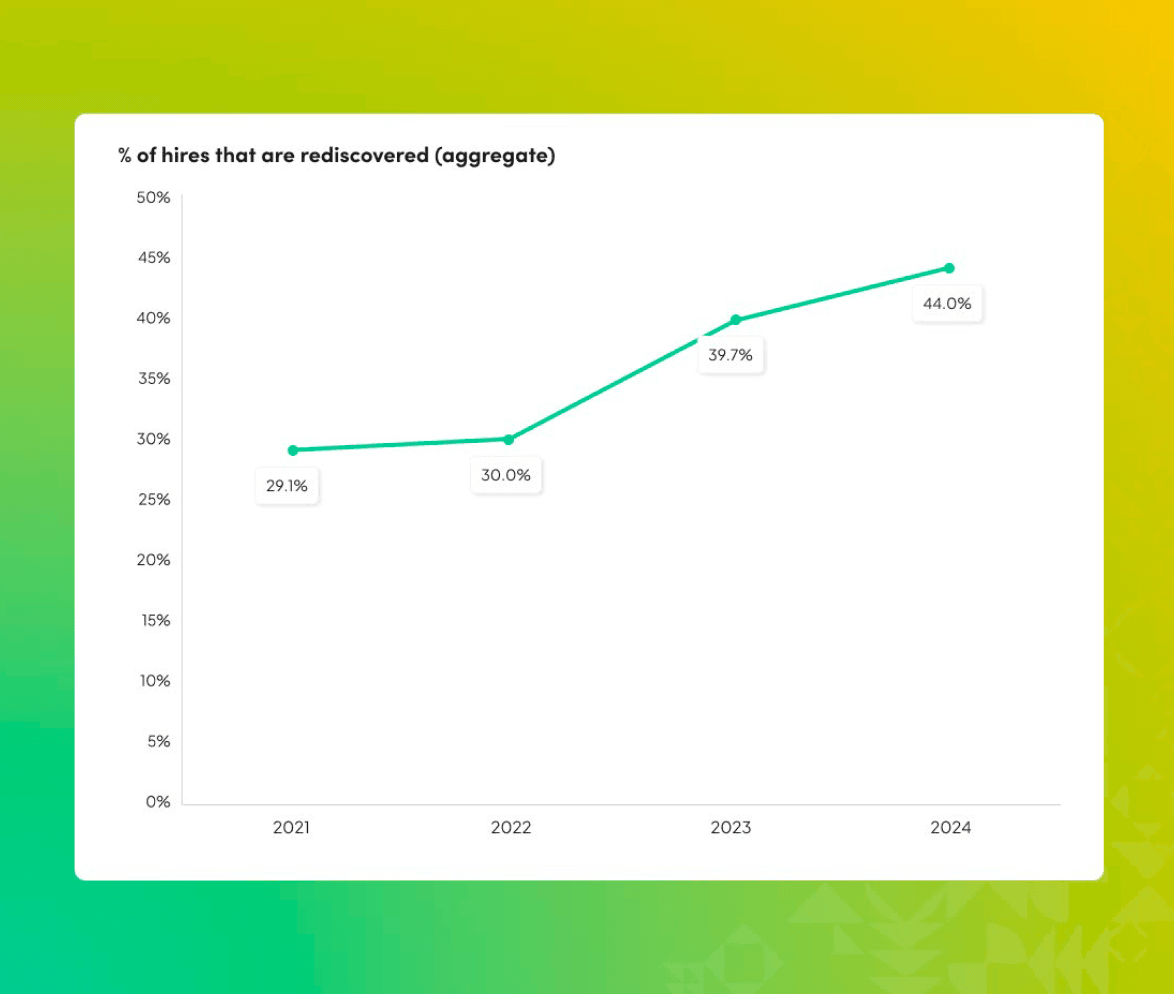
Source: https://www.gem.com/blog/hidden-in-plain-sight-the-untapped-potential-of-candidate-rediscovery
Business models and positioning
LinkedIn operates on a freemium model: browsing and posting job ads are free, but access to profiles and advanced tools requires paid subscriptions. Indeed uses the pay-per-click model, while Glassdoor focuses on employer branding and employee reviews. Monster and CareerBuilder, historically based on monthly subscriptions, are declining in the face of freemium and PPC models.
The future of the sector could see greater consolidation, a rise in paid specialist platforms, and hybrid alternatives combining AI and aggregators.
Will LinkedIn be able to keep raising its prices without losing users to AI-powered or free tools?
The impact of new technologies (AI and automation)
AI is already transforming job searching and recruitment. LinkedIn offers AI features for sourcing and optimising job ads. Indeed has launched Smart Sourcing to automatically recommend relevant profiles, used successfully by 92% of employers. The platform recently announced the launch of its AI assistant by the end of September 2025, which would allow it to catch up on AI. However, this version will be available in English only, but it will deliver real productivity gains for recruiters.
New “AI-first” platforms are emerging, ranging from job ad aggregation to predictive analysis of applications. Google Jobs, built into Google Search, acts as a meta search engine, reducing reliance on the original sites. Niche job boards using AI are multiplying, while at the same time AI-assisted CV screening appears to be becoming the norm, increasing the relevance of suggestions for both candidates and recruiters.
Trends and future outlook
👉🏼 Candidates are using more and more search channels. In addition to traditional job boards, they are turning to aggregators such as Google Jobs, social networks (TikTok, Instagram, Twitter), communities on Slack/Discord/Telegram, and employer brand reviews (Glassdoor, Comparably).
👉🏼 Expectations include flexibility, remote working, work-life balance and company values. Job boards must build these criteria into their filters to remain attractive.
👉🏼 The market is moving towards consolidation and specialisation of platforms. New technologies, AI in particular, and personalised user experience are redefining the role of job boards. Regulatory and ethical aspects, such as algorithm transparency and data protection, will become key issues.
The question remains: how will traditional job boards (simple job search engines) be able to survive in the face of networks and AI tools? For now, they remain essential, but their role is evolving towards that of aggregators and showcases. Data-driven business models could emerge.
Conclusion
LinkedIn and Indeed remain essential, but for different reasons: LinkedIn excels in network reach and engagement, while Indeed stands out for its volume and its accessible advertising model. No platform is universally “best”: the choice depends on your objectives (visibility, quality of traffic, budget).
The trends to watch are clear: specialisation of platforms, the growing role of AI, an ultra-personalised candidate experience, and the integration of job boards with other recruitment tools (ATS, CRM, aggregators). Candidates and recruiters are becoming more demanding, and job sites must constantly innovate to remain relevant.
In short, the global job board market is both vast and fragmented. The global giants (LinkedIn, Indeed) dominate in terms of traffic and engagement, but local or specialist players remain essential in their niches. Recruiters need to combine several platforms to maximise the reach and quality of applications. Finally, the adoption of new technologies, AI and automation in particular, is redefining the role of job boards and paving the way for new recruitment models.
📚 Article sources
Semrush - Indeed
Semrush - LinkedIn
Semrush - Monster
Semrush - Glassdoor
Semrush - ZipRecruiter
SimilarWeb - hh.ru
Workello - Study on job boards in China
JobsPikr - Study on the volume of job ads published
CandidatePicker - Study on job board usage
Money.com - Study on the best job boards for employers
Jobboardsecrets - Article on the decline of Monster and CareerBuilder
Hrtechfeed - Indeed launches its AI smart sourcing tool
Tubefilter - TikTok becomes a job board for Gen Z
Jobvite - Study on job seekers in 2024
