Candidate cloning is a request that recruitment agencies and headhunters often face when providing services for a client.
Let's start by clarifying what is meant by "candidate cloning." When we talk about candidate cloning, we refer to the principle of searching for people with the same skills and experiences as an employee already present in the company. This can be done by targeting the same positions, using the same recruitment channels, or having the same selection criteria for candidates.
This method seems logical; searching for candidates with similar experiences or skills could ensure a certain continuity and increased productivity for the company. However, risk-free hiring can be restrictive and does not engage the company in a diversity approach. Indirectly, this encourages not considering individuals with different experiences and varied skills.
Why clone candidates?
Companies are attracted by this recruitment mode, which involves sourcing candidate profiles that resemble a departing employee or are an exact replica of a current employee. This is a way to ensure operational success by quickly replacing a departed employee, for example. It's easy to imagine that the new employee will require less training time and will more quickly fit into "the mold."
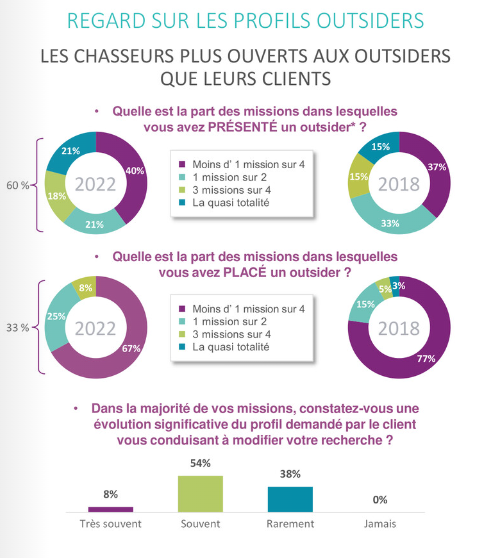
Cloning is an effective and cost-efficient solution for companies in the short term and sometimes reassures them, knowing that hiring an unsuitable candidatecan be very costly.According to the latest Oasys study, "if consultants insist on proposing outsiders to their clients in their shortlists, clients remain cautious about this type of profile."
As a business leader, team leader, or HR, seeking a profile that presents seemingly less risk because they are already "integrated" into the company provides reassurance. By operating this way, recruiters theoretically save time and work in familiar territory through shared language elements.
Some figures
During the 2022 Oasys study,"Head-hunting and recruitment agencies: Between taboos and preconceived ideas, what practices and what real contribution?", it was revealed that in more than 2 out of 4 assignments, nearly 70% of recruiters feel they are being asked to recruit a clone.
The study also specifies that in 2 out of 3 cases, the outsiders proposed by headhunters are not retained by their clients.
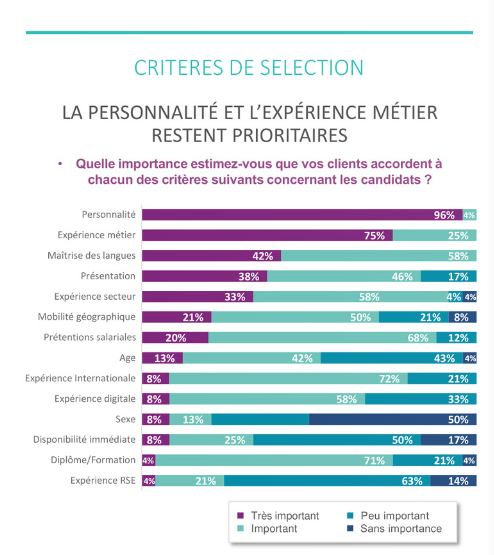
The figures clearly show the strong duality between work experience and personality. These are the two most important criteria: 96% personality, 75% work experience.
Advantages for "clone" candidates?
The clone candidate can quickly understand that they don't need to sell themselves much during the recruitment process. If they already possess the necessary skills, they have a strong chance of securing the position ready-made, where they just need to settle in.
The clone employee already masters the position they are joining, their tasks seem simple to them; however, they can quickly become demotivated in the absence of challenge or other motivations.
Clone candidates can find comfort in a preformatted job and only need to exert the effort demanded.
What pitfalls hide behind this practice?
Companies may experience difficulties in recruiting, retaining their employees, and/or helping them grow.
Cutting off sources of diversity and renewal can be a hindrance to a company's long-term performance and richness. Indeed, the more a company has varied profiles within its structure, the more ideas confront and evolve. By recruiting clone employees, the employer may deprive themselves of different ways of thinking.
Moreover, adopting a recruitment method by cloning sends a timid image of recruiters, their lack of audacity weakens the evolution of their mindsets. Thus, recruiting an atypical profile would be a big risk for the company but generally reserves a pleasant surprise in the end.
By searching for similar people, companies may miss opportunities to recruit individuals with other different skills that could bring added value to the company.
In summary
Employers would benefit from weighing the pros and cons of candidate cloning and seeking to maintain a balance on the continuity and productivity of the company before adopting this recruitment method. Finally, it is important to consider the importance of not making discriminatory selections; remember that each candidate is unique and has different experiences and skills.
