Methodology
The Dares(Directorate for Research, Studies, and Statistics) published a survey this summer on the labor market situation in the second quarter of 2023 in France. Discover the major labor market statistics.
Are labor shortages coming to an end?
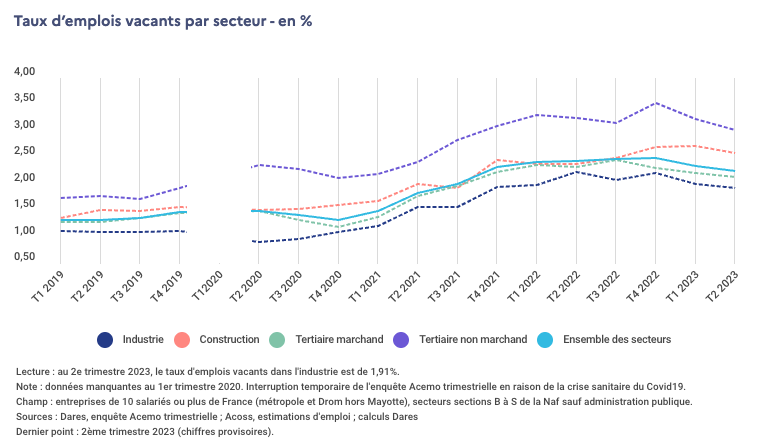
Following the survey, Dares observed a decrease in recruitment difficulties in the second quarter of 2023; however, these difficulties remain degraded in most sectors compared to pre-pandemic trends.
The lack of skilled labor is primarily the cause of high difficulties for the construction sector.
The vacancy rate is generally decreasing across all sectors but remains significantly higher (2.2%) than before the COVID-19 pandemic.
Workforce Turnover
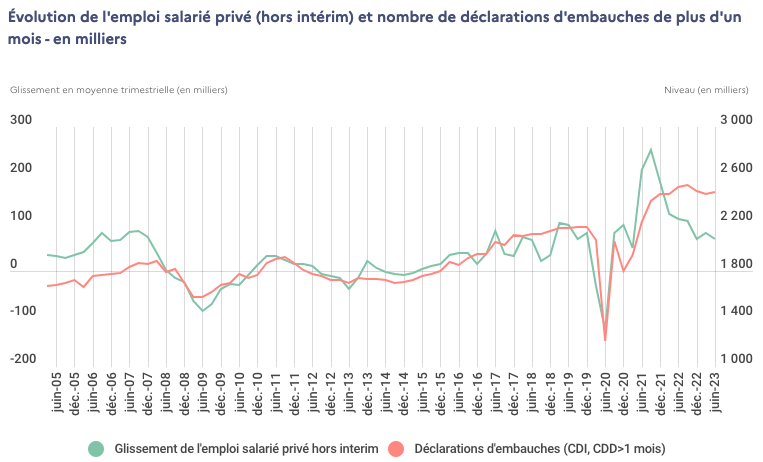
The number of hires with contracts longer than a month increased in the first quarter of the year (+0.7%).
These hires do not necessarily translate into a net increase in jobs but rather an intensification of workforce turnover, as evidenced by the recent increase in contract terminations, which are more numerous each quarter, especially for permanent contracts.
This growth is mainly driven by an increase in resignations (550,000 cases recorded in the first quarter). It increases in all major sectors, but mainly affects the trade, hospitality, catering, and business services sectors.
These sectors account for 56% of the increase in resignations between the end of 2019 and early 2023. According to Dares, in 2022, a higher proportion of private employees were leaving their jobs, mostly for other private companies or often for a different sector.
Quarterly Analysis: The Labor Market Maintains Stability
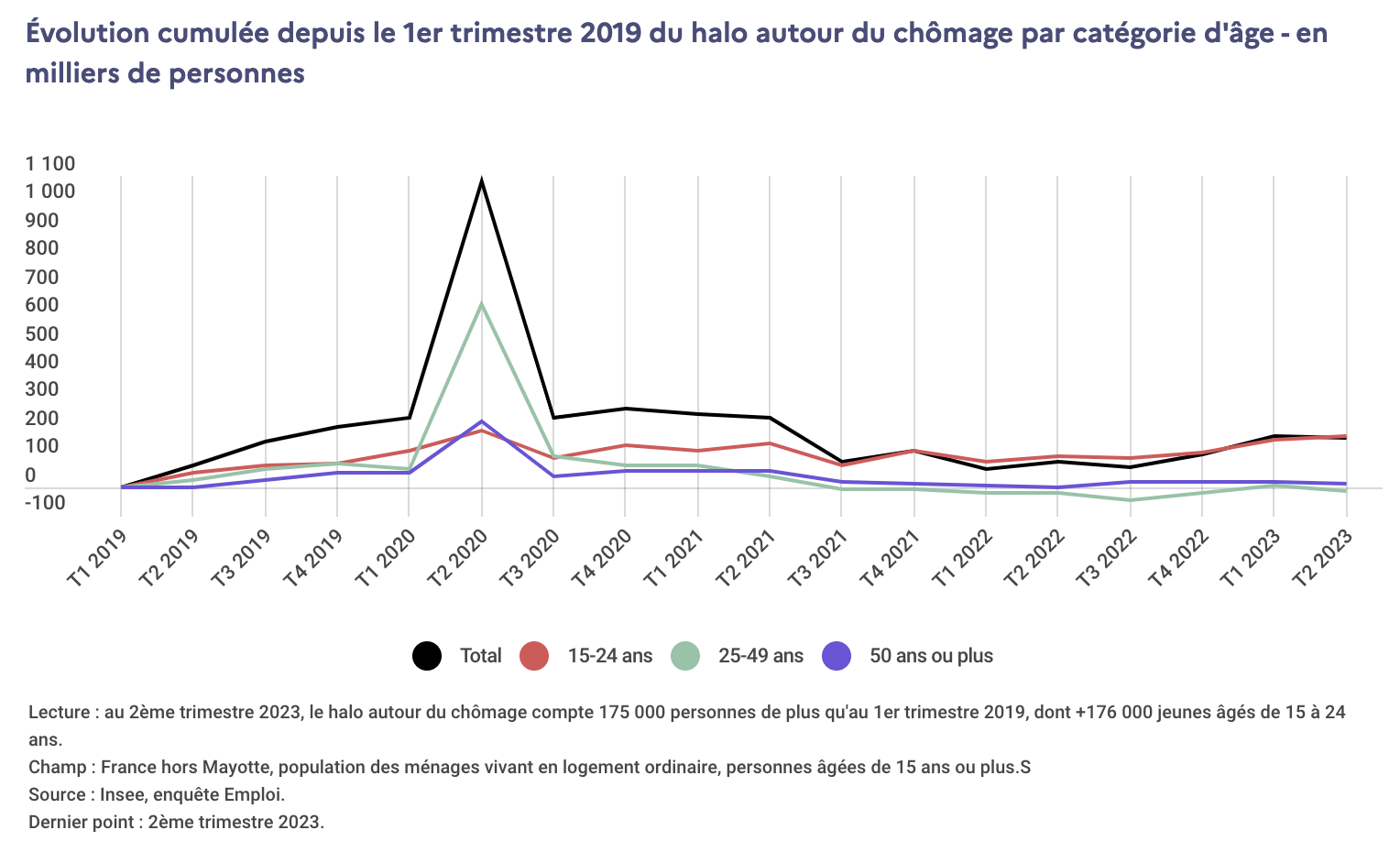
In the second quarter, the labor market showed overall stability, with unchanged activity, employment, and unemployment rates among the population aged 15 to 64. However, there is a slight increase in the halo around job seekers among the youth, while it remains stable for other age categories.
Nominal Wages VS Inflation
Wages are catching up with inflation, with the rate of increase in the basic monthly salary exceeding inflation.
For the first time since 2021, there is an increase in real wages in the second quarter of 2023, with a 0.2% rise compared to the previous year for the basic monthly salary of all employees, and a 0.7% increase for the basic hourly wage of workers and employees. This increase is largely attributed to the slowdown in inflation, which stands at +4.4% over a year in the second quarter of 2023, compared to +5.7% in the first quarter. It should be noted that the annual progression of nominal wages remains stable between the first and second quarters of 2023.
Sources
MyRHline:Decrease in Recruitment Difficulties in the Second Quarter of 2023
Dares Survey:The Labor Market Situation in the Second Quarter of 2023
HelloWork Media:A Slowing Job Market and Decreasing Recruitment Difficulties According to Dares
