The Montaigne Institute recently published a survey commissioned and conducted with the polling institute Kantar Public among French employees on their view of work.
Methodology
The survey was conducted from mid-September 2022 to early October 2022 among a panel of approximately 5000 workers.
The quotas used to infer results to the population are gender, age, socio-professional category, region, and type of urban area.
All types of workers were surveyed: private sector employees, public sector employees, and self-employed.
A questionnaire of over 60 questions, lasting a maximum of 20 minutes and self-completed by the respondent.
Survey themes
Through the questionnaire, 5 themes were chosen by the Montaigne Institute.
- Job satisfaction and its determinants
- Work duration, workload, work difficulties
- Remote work
- End of career and retirement
- Career evolution and professional mobility
The Nicoka team invites you to observe the results from these different themes together.
Here is the first theme.
Job satisfaction and its determinants
On a scale from 0 to 10, employees had to rate their satisfaction.
The average job satisfaction of employees is 6.7 out of 10., with nearly 8 out of 10 workers giving a rating of 6. Only 13% of workers gave a rating below 5.
A rating of 6 is generally used as the minimum perceived satisfaction on a scale of 10.
Overall satisfaction has remained stable for nearly 20 years.
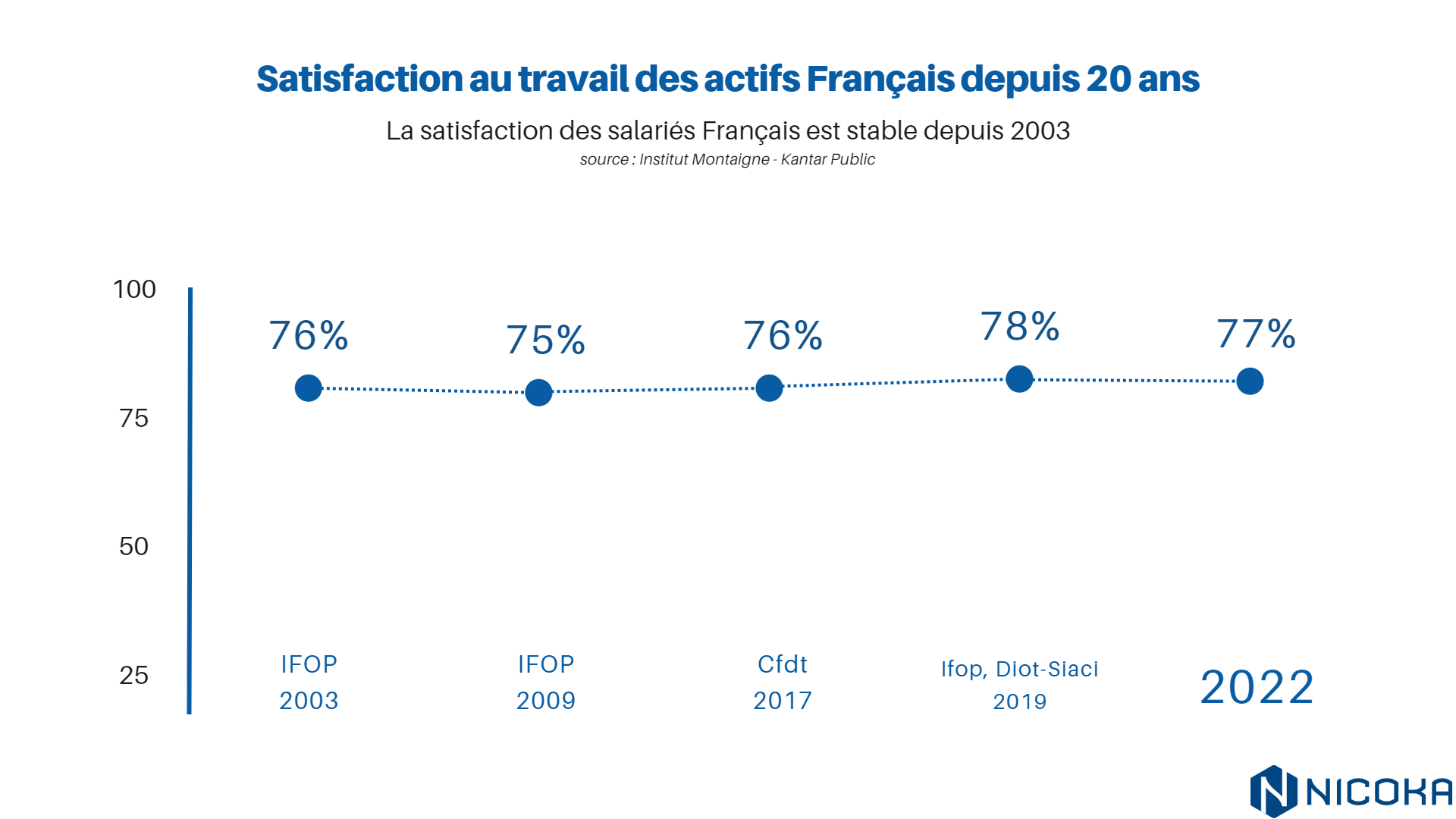
Satisfaction varies by profession. Self-employed individuals are more satisfied (7.6) with their work than employees (6.7).
In general, average satisfaction varies between 5.9 (low-skilled industrial workers) and 7.8 (Business owners with more than 10 employees / Craftsmen).
Workers are more satisfied with the interest of the task, working hours, autonomy, relationships with colleagues, and team integration.
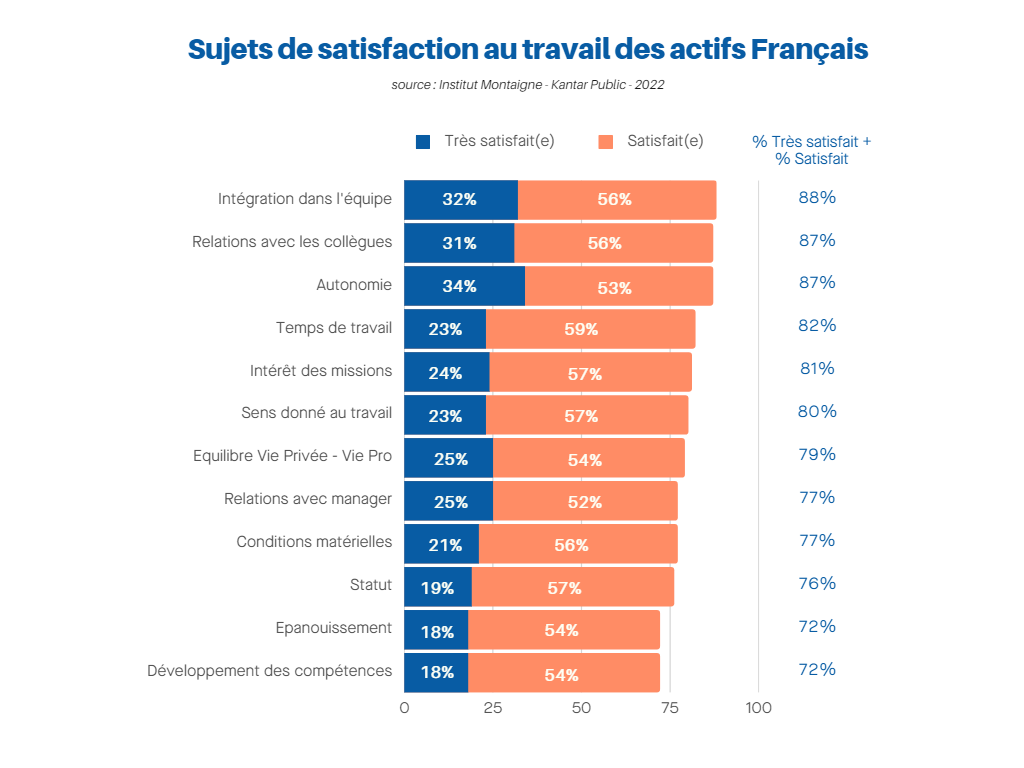
Looking at the results by type of activity, self-employed individuals are clearly more satisfied across all the criteria mentioned above. Notably, there are satisfaction gaps of nearly 20% between Self-employed and Employees.
Regarding the most satisfying management qualities today, trust comes first (85% of workers satisfied with the trust given), followed by manager availability and listening (74%) and empowerment (71%). Conversely, management by example does not seem to be a satisfaction criterion, with only 1 in 2 workers satisfied (53%).
These initial results show, on the one hand, the absence of a "break from pre-COVID periods" and the absence of a "great resignation." Workers haven't lost the sense of work.
Regarding the main elements of dissatisfaction, unsurprisingly, remuneration (46% of workers dissatisfied), career progression opportunities (42%), and recognition at work (38%) are noted.
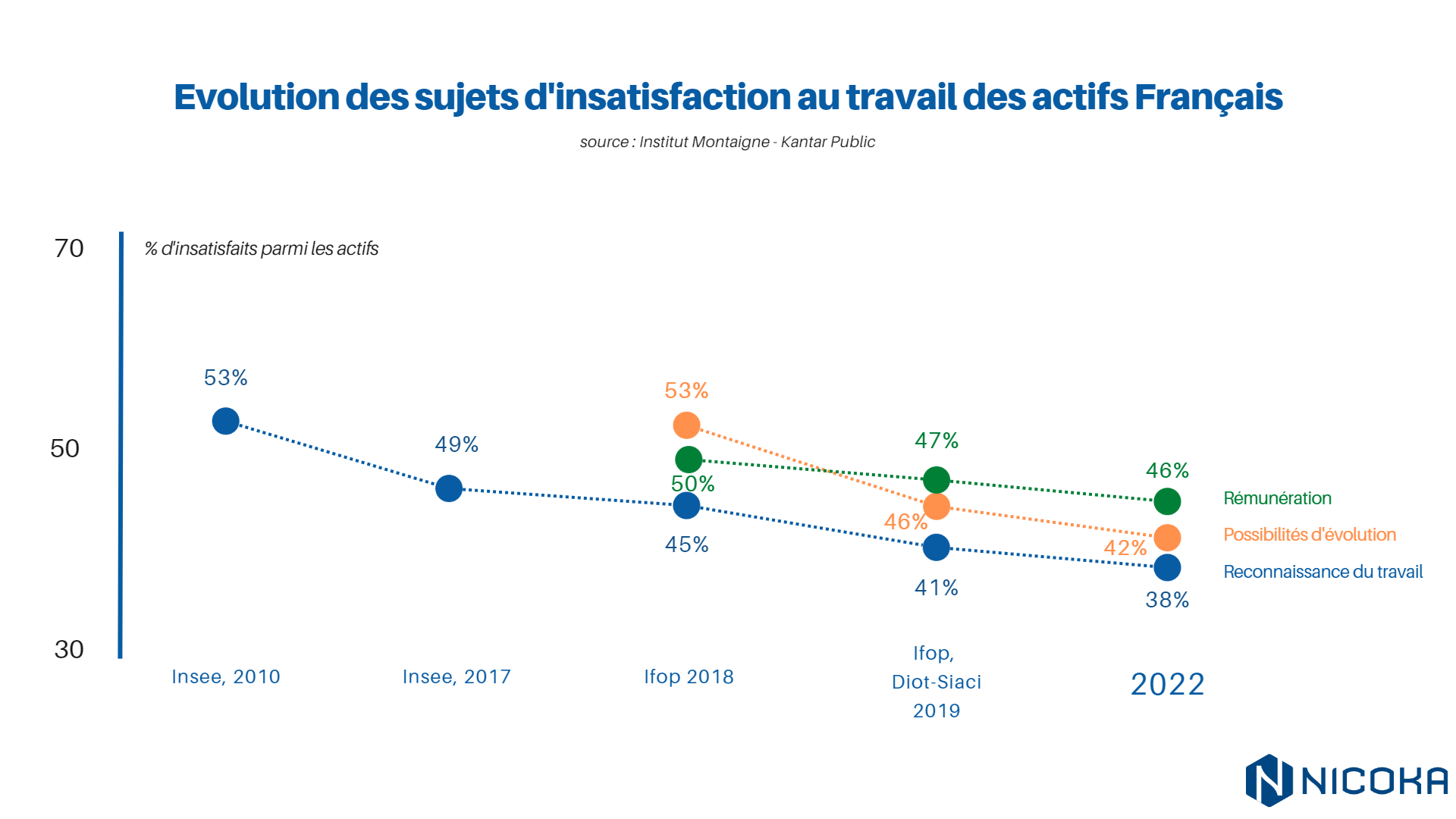
Among other dissatisfaction topics is remote work, with a particularly high percentage of "Not at all satisfied" among workers, with 32% very dissatisfied.
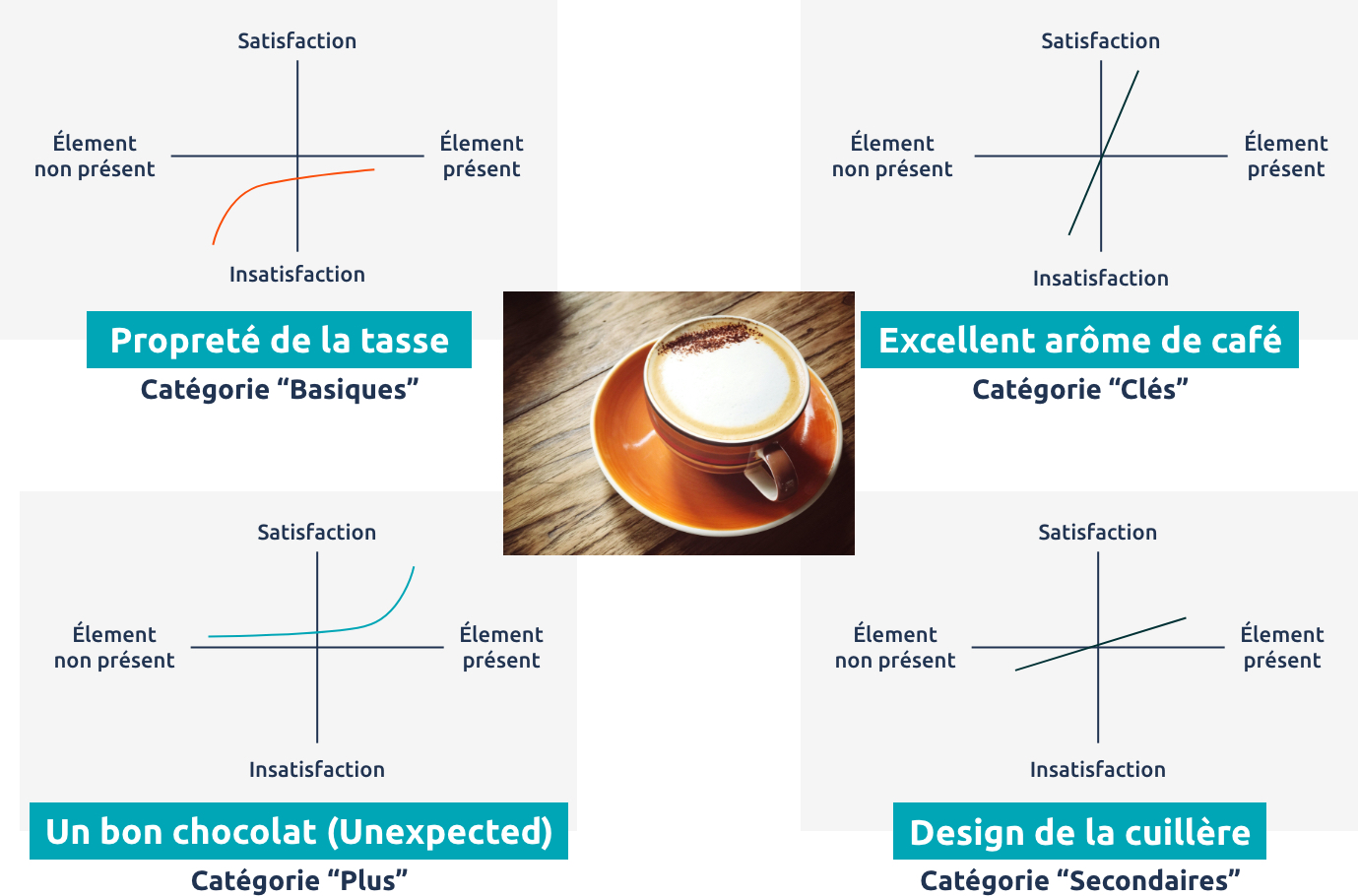
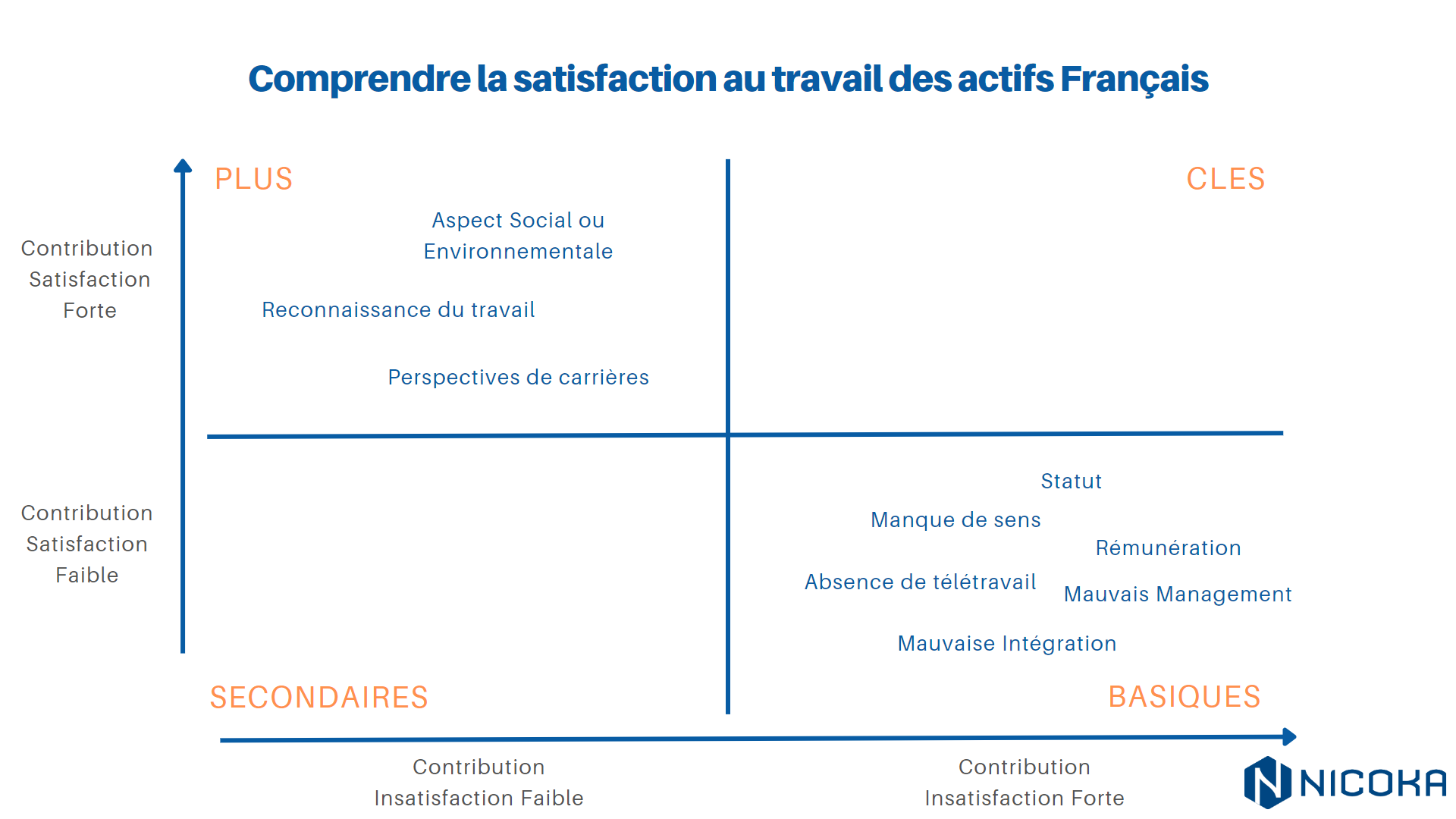
Let's now look at the elements producing dissatisfaction and satisfaction. It is important to consider one element: a specific satisfied topic may not produce general satisfaction, but its dissatisfaction can generate general dissatisfaction. For example, every morning you turn on your computer, but it does not bring you satisfaction. However, you are satisfied with your computer. The day it no longer starts, it then generates dissatisfaction because it is not "normal." These are the dependent expectations of each individual that provoke satisfaction or dissatisfaction. We can then separate the criteria into 4 categories.
- The basics: the element is expected, and its presence does not generate satisfaction. Its absence generates dissatisfaction.
- The keys: the element is expected and necessary. Its presence generates satisfaction. Its absence generates dissatisfaction.
- The extras: the element is a surprise, and its presence generates satisfaction. Its absence does not generate dissatisfaction.
- The secondary: the element is not expected, and its presence or absence does not generate satisfaction.
According to Kantar, which has carried out in-depth analyses:
- The elements, when satisfied, andgenerators of satisfactionat work are
- Good career prospects
- That the work provided helps social or environmental causes
- Recognition of work by direct superiors (N+1)
- The elements, when satisfied, andnot generators of satisfactionat work are
- remuneration
- The elements, when not satisfied,and generators of dissatisfactionare
- remuneration
- status (non-manager)
- lack of meaning
- absence of remote work
- mental workload
- poor team integration
- poor management
Sources
Here is the link to the survey:The French at work: overcoming preconceived ideas
