Before going into detail, here is a quick reminder of the different types of review.
Discover or rediscover our article comparing the professional development review (entretien professionnel) with the performance review: professional development review vs performance review. 🔦
When should you launch your annual review campaign?
The ideal timing for launching your annual review campaign depends on several factors, such as:
1) Alignment with company objectives: the review period should coincide with the close of the previous year's objectives and the setting of objectives for the following year. A launch between December and February is therefore often ideal, as it allows you to assess the past year and set prospects and objectives for the new one.
2) Availability of managers and employees: for reviews to be conducted calmly and productively, avoid periods of heavy workload or holidays. Choose a time when everyone can concentrate fully on the discussion, so that the conversations are constructive.
3) Frequency of reviews: some companies take a more flexible approach by holding quarterly or half-yearly reviews. If this is your case, the launch should coincide with the end of a cycle, for example the end of a quarter or half-year, to allow regular review of objectives and performance.
The essentials for a successful annual review campaign
A well-run review campaign rests on a few key principles. Here is a reminder of the essentials not to forget to maximise its impact:
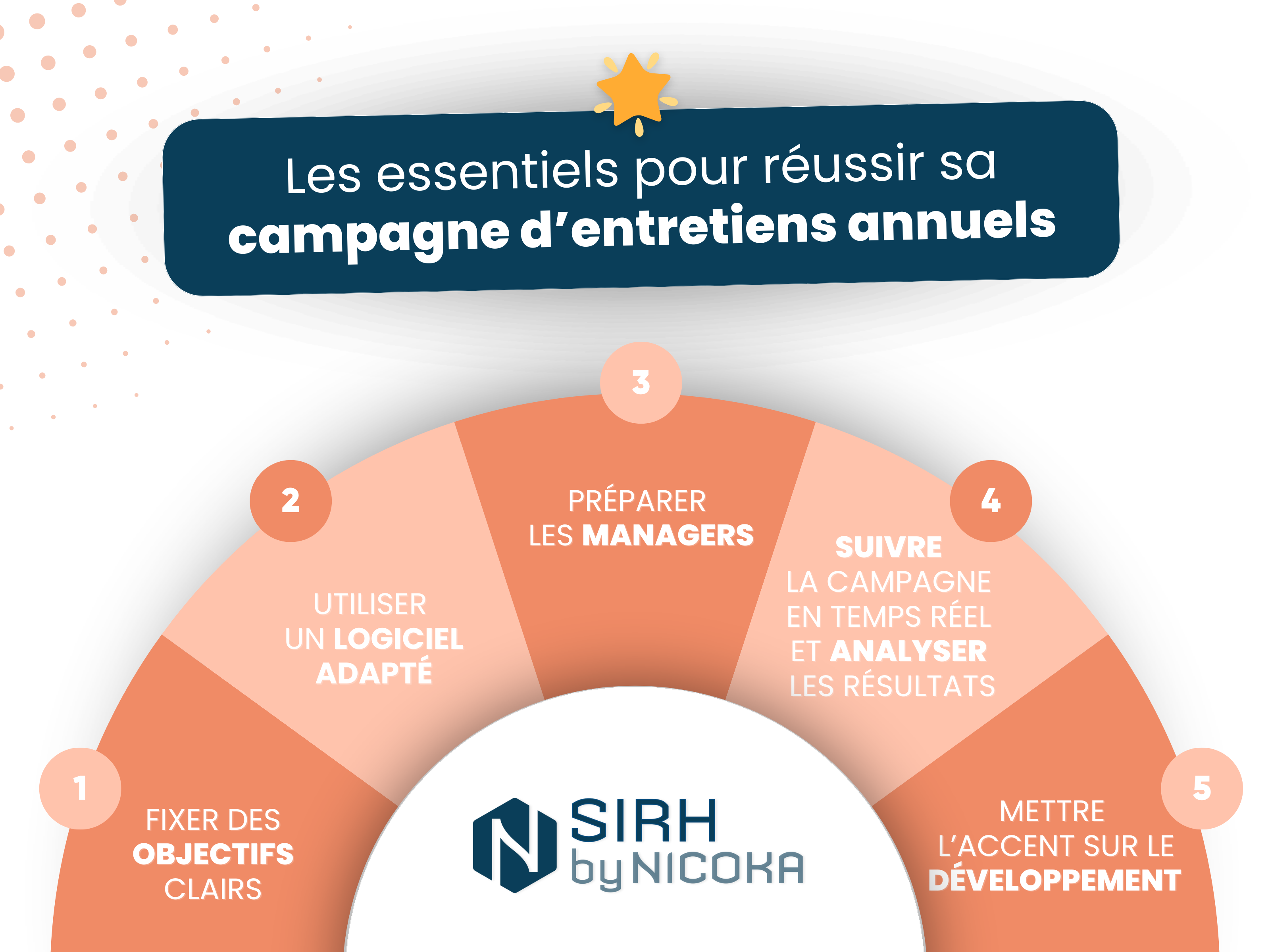
👉 Set clear objectives: from the start of the campaign, tell managers and employees what these reviews are for. Is it to assess performance, discuss future objectives or identify development opportunities? A review without a clear objective can quickly become a pointless formality. It is essential to inform all employees properly about the process, to encourage greater involvement.
👉 Use suitable software: a good tool allows you to customise questionnaires, track reviews in real time and ensure full traceability of discussions and of the objectives set. By choosing tailored software such as Nicoka HRIS, you can adapt the questions to the role, the team or the topic, which makes the review more relevant for each employee. A guide or tailored support will be needed to get to grips with the software you use.
👉 Prepare your managers: a successful review depends largely on the manager. Train them in supportive communication and constructive feedback, and make sure they have all the information they need before the review (performance data, team feedback, etc.).
👉 Real-time tracking and analysis of results: once the campaign has been launched, Nicoka enables HR teams to track the progress of the campaign in real time, spot reviews that have not yet taken place and analyse the results on an ongoing basis. Once the campaign has closed, this lets you quickly identify areas for improvement and/or training needs.
👉 Focus on development : employees like to know how they can progress. Do not limit the review to a performance assessment: include discussions about training, development or even internal mobility opportunities.
Innovative questions to ask in annual reviews
To enrich the discussion and avoid overly standardised questions, here are a few suggestions to add to your questionnaire:
- “Which skills would you like to develop over the next 6 to 12 months?”
This allows you to discuss not only current performance but also the employee's career aspirations. - “Which recent project or challenge has given you the most satisfaction?”
This question encourages the employee to reflect on their successes, while giving you an insight into what motivates them most in their work. - “How can we improve the way we work together?”
This type of question opens the door to discussions about internal organisation, processes or teamwork. - “What is the most useful feedback you have received this year?”
Asking this question helps you understand how the employee perceives the feedback they have received and allows you to improve the feedback process. - “If you had a magic wand, what would you change about your role or your working environment?”
A little more light-hearted, this question can reveal issues the employee would not otherwise dare to raise.
What if we reversed the roles?
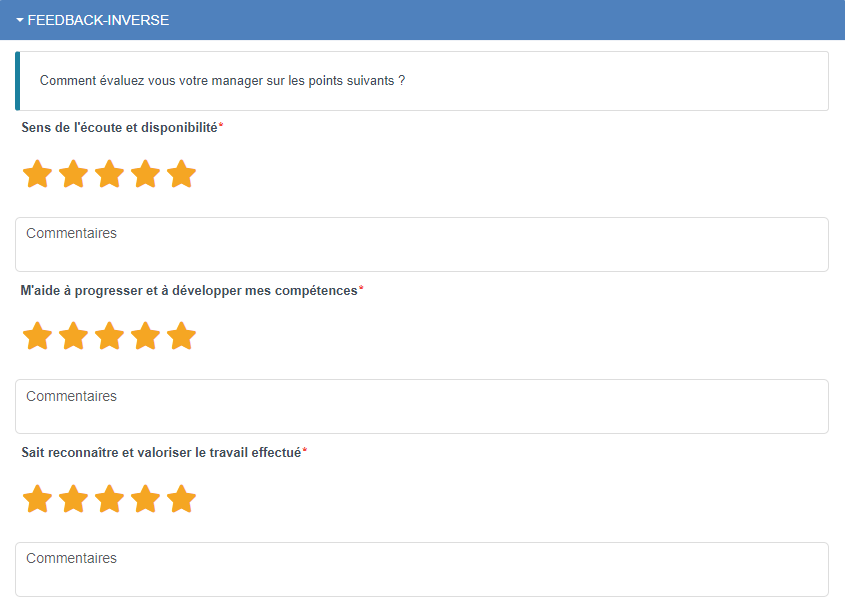
The annual review is often seen as a one-way assessment, from the manager to the employee. But why not reverse the roles and give employees the opportunity to assess their manager too? This type of feedback, known as reverse feedback, helps build a climate of trust and continuous improvement in the company. It can also give managers areas for improvement so they can better support and lead their teams.
Many do not dare to do it for fear of the consequences, or do not know how to go about it for lack of methods, yet the benefits can be numerous:
- Encourages transparency and trust 🤝🔍: allowing employees to speak about their relationship with their manager shows openness to dialogue and improvement, which strengthens trust within the team.
- Employee engagement 🎯💬 : giving teams a voice makes them more engaged. They feel listened to and that they play an active part in their working environment.
- A better working climate 🌱🏢 : by assessing their manager, employees can point out ineffective management practices or suggest ways to improve. In the long run, this leads to a healthier and more collaborative working environment.
Why not start with just 2 or 3 questions with a star rating added to your annual review questionnaire:
The benefits of HR software for your annual reviews
As an HRIS software publisher, we offer a tailored solution that allows you to create questionnaires adapted to the needs of each employee and to track the review campaign in real time.
The benefits are many:
- Paperless forms: Forget paper forms that end up in a drawer! Software frees teams from the administrative burden of setting up review campaigns. Once finalised, reviews are stored and archived in the software, ensuring better traceability.
- Full customisation: each department, team or employee receives specific questionnaires adapted to their role and objectives, which makes the review more relevant.
- Centralisation and tracking : a campaign generally runs over 1 to 2 months, and during this period you can have a clear view of each participant's progress. You can track in real time the reviews being prepared and which employee has completed their review, and send reminders to latecomers!
- Simplified reporting and analysis: once the campaign is over, our tool provides you with a summary of the answers for an overall analysis and the implementation of action plans.
In short, the success of your annual review campaign relies on rigorous organisation, good timing and an approach focused on personal & professional development. With a suitable tool such as Nicoka HRIS, tailored and easy to use, you can turn this campaign into a real lever for performance and engagement for your employees.
